// ARS TECHNICA — SPAZIO & SCIENZA
NASA has a Dragon dilemma, and there appear to be no good answers
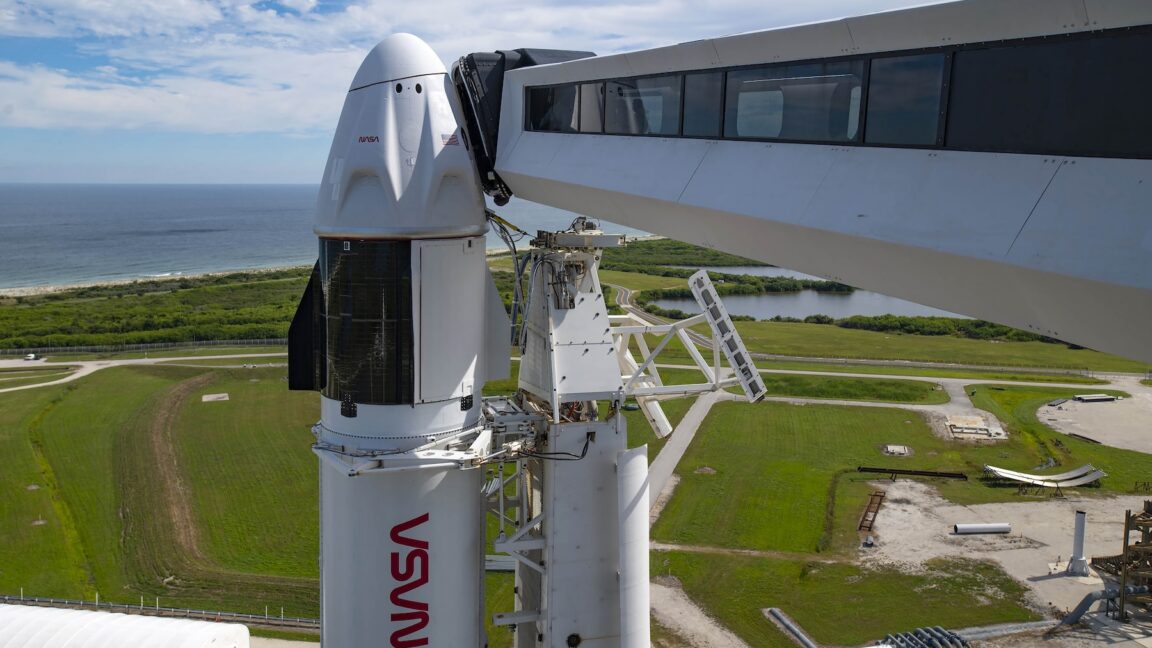
For two decades, largely in service to the International Space Station, NASA has sought to foster an “economy” in low-Earth orbit.
Twenty years ago, with a program to develop private spacecraft for cargo delivery to the space station, NASA sought to “stimulate efforts within the private sector to develop and operate safe, reliable, and cost-effective commercial space transportation systems.” In recent years this has expanded to creating an entire commercial ecosystem in orbit, with transportation, space stations, manufacturing, tourism, and more, such that NASA is one of many customers in the market.
In April 2024, the space agency explicitly laid out its philosophy: “NASA supports a robust commercial space economy that advances American industry and promotes technological discovery through in-space work and research. NASA remains committed to fostering innovation and collaboration within the American space industry.”
But just two years later, there are growing questions about the viability of this. As the second space race heats up, NASA has become more interested in focusing on the lunar surface, with a robust Moon base. SpaceX has signaled it no longer wants to be in the business of flying astronauts into low-Earth orbit. Today, the grand plans for a low-Earth orbit economy, at least involving humans, appear to be going sideways.
So what happened, and why does it matter? Ars spoke with a number of industry sources, on background, to provide some answers.
A. In recent months, SpaceX has made it clear to NASA that it no longer wishes to fly its Crew Dragon spacecraft, or the Falcon 9 rocket, on missions to low-Earth orbit. The company has agreed to support the International Space Station until 2030. But after that, SpaceX intends to retire the spacecraft. SpaceX has told companies developing private space stations for low-Earth orbit, including Axiom Space, Voyager Space, and Vast Space, that they cannot order Crew Dragon missions for their habitats.
A. NASA invested $3.1 billion in the development and certification of Crew Dragon as part of the Commercial Crew Program. But SpaceX was only compelled to fly half a dozen missions. It has flown 13 missions for NASA to the space station, and will launch another one in a few days. The company had recently agreed to keep flying through the Crew-17 mission. SpaceX has therefore more than fulfilled its contract obligations to NASA.
Q. But isn’t NASA a really important customer for SpaceX?
A. It was in the past, yes. But SpaceX now derives a majority of its revenue from Starlink, and that proportion is likely to grow even more. Additionally, as part of the process of going public earlier this year, in financial filings, SpaceX made clear that it envisions a vast majority of its future revenue will come from Starlink and orbital data centers. The category of “space enabled solutions,” of which NASA is a fraction, represented approximately 1 percent of what SpaceX views as its “total addressable market.” In other words, NASA needs SpaceX more than SpaceX needs NASA. Going forward, SpaceX wants to focus on launching its own payloads—on the Starship rocket. NASA Administrator Jared Isaacman recognized this reality during a news conference on Monday, saying, “I do not think it’s a secret that SpaceX intends to sunset older platforms like Falcon and Dragon as they concentrate on their next-generation capability, Starship.”
A. Four astronauts currently launch on Dragon. Starship could potentially bring dozens of astronauts into orbit at a time. That would be revolutionary for access to low-Earth orbit and an economy there. However, SpaceX has told NASA it is not interested in developing Starship for human launches into Earth orbit at this time. (Again, they’re focused on their own payloads). Ascent and entry of Starship, carrying humans, would raise a tangle of safety and regulatory concerns and is not a priority for the time being. NASA has no real way to compel SpaceX, and any pol