// TOM'S HARDWARE US — HARDWARE & GADGET
OpenAI’s Jalapeño ASICs are deployed alongside AMD EPYC ‘Turin’ CPUs as hosts, not Nvidia's Vera
Hardware VP Robert Ho says the choice to use Turin was “pragmatic.”
When you purchase through links on our site, we may earn an affiliate commission. Here’s how it works.
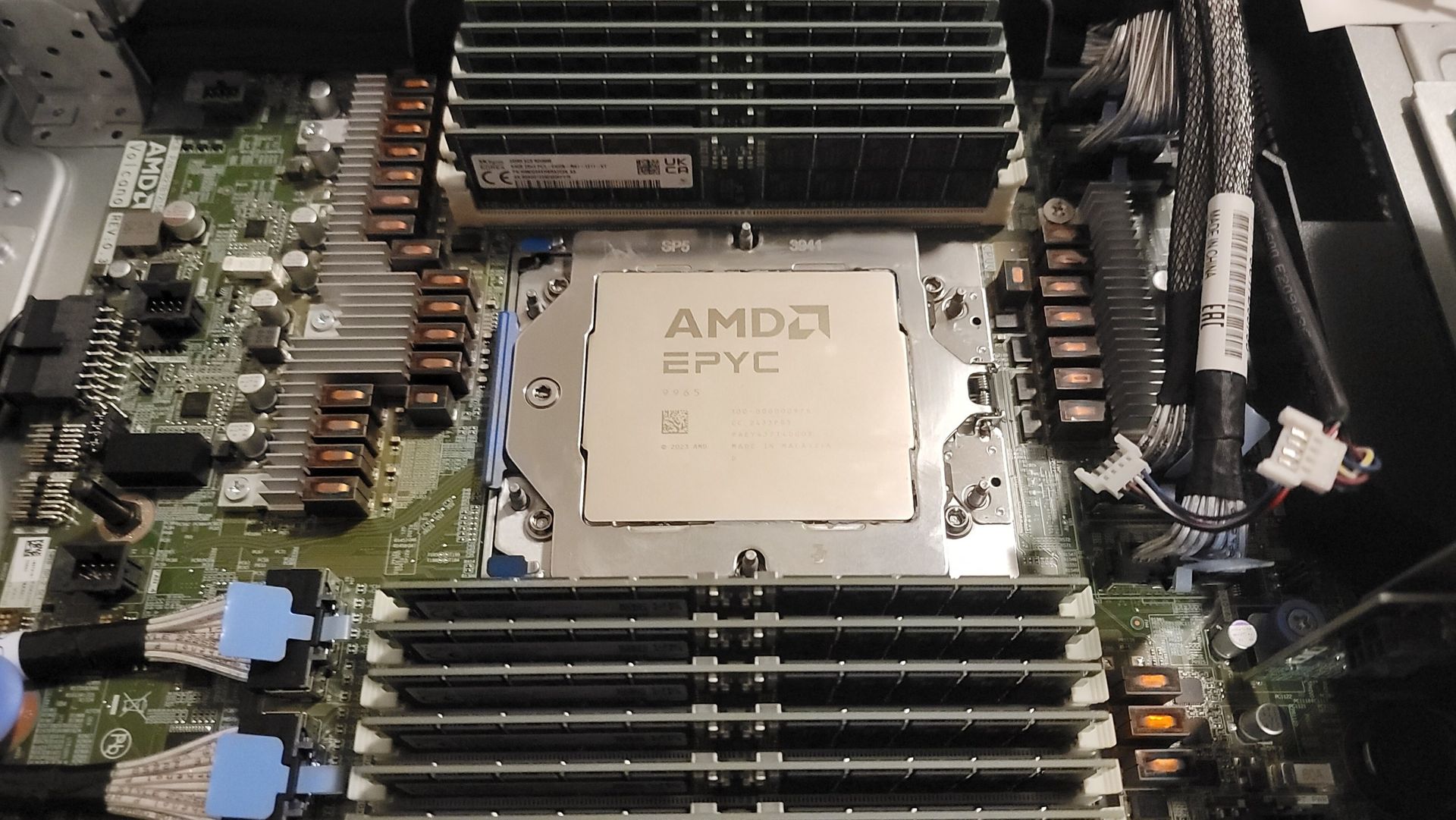
OpenAI’s new Jalapeño ASIC is being deployed internally alongside AMD EPYC Turin hosts, each with 1.5TB of memory. SemiAnalysis described the rack-scale deployment of Jalapeño following the reveal of the chip, which we asked Richard Ho, VP and Head of Hardware at OpenAI, about in an interview. Ho told us that the decision to use Turin was “pragmatic,” describing Nvidia’s new Vera CPU as “a little bit behind… on that maturity level.”
“The way we approached that design was really in terms of de-risking and being able to do that design fast. Vera, as a standalone, is a little bit behind on that maturity level. The Turing device is strong. It did what we needed to do, and partly our partners had some experience with it,” Ho told Tom’s Hardware Premium. “For the Jalapeño program, we were trying to make very pragmatic decisions. We wanted to be aggressive on the goals of the performance and the cost, but we didn’t want to take unnecessary risks. That felt like a good design decision that would fit within the parameters of how we make these design decisions."
There are many Arm-based CPUs on the market, many of which are deployed internally at different hyperscalers, such as Google Cloud’s Axiom and AWS’ Graviton, but Vera and Arm’s own AGI have been described as agentic CPUs, purportedly accelerating the complex reasoning involved in agentic loops compared to their x86 counterparts from AMD and Intel. We asked Ho about this dynamic, and why Turin was the right choice given the close working relationship between OpenAI and Nvidia, who responded with the quote above.
Arm has long touted the virtues of the AArch64 ISA compared to x86, going as far as to claim that its own AGI CPU provides more than twice the performance of modern x86 platforms. That claim is based on internal estimates, not real benchmarks, however. The company has been naturally bullish on AGI’s adoption in the market, though even with an impressive $2 billion in commitments, analysts say the market penetration will still be in the low single digits after two years.
With the explosion of server CPU demand this year and evolving agentic workloads, Nvidia has been at the forefront of messaging, comparing its Arm-based Vera to the x86 competition, boldly claiming a 1.8x improvement over a competing AMD Turin chip; a figure that’s extracted from an overall benchmark suite showing Vera just 3% ahead of AMD’s EPYC 9755.
Many semi-custom Arm designs, from Graviton to Azure’s Cobalt, have focused on core density and efficiency for cloud workloads. Vera and AGI are a shift toward messaging against peak performance. In early Vera benchmarks, Nvidia’s CPU looks impressive, though we’ve yet to see the chip in action in a wide variety of workloads, much less benchmarked against AMD’s upcoming Venice CPUs or Intel’s Diamond Rapids.
What’s interesting about OpenAI’s decision to use Turin is that it’s one of Arm’s deployment partners for AGI, as well as among the list of customers “exploring the Vera CPU,” according to Nvidia. OpenAI, other frontier labs, and hyperscalers keep a wide variety of hardware in their fleet. Pairing Jalapeño specifically with Turin came down to reducing risk, with Ho pointing to the maturity of the platform.
Get Tom's Hardware's best news and in-depth reviews, straight to your inbox.