// NATURE NEWS — SPAZIO & SCIENZA
How big tech is building a military–industrial complex in the age of AI
Chris Stokel-Walker is a freelance journalist in Newcastle, UK.
Search author on:
PubMed
Google Scholar
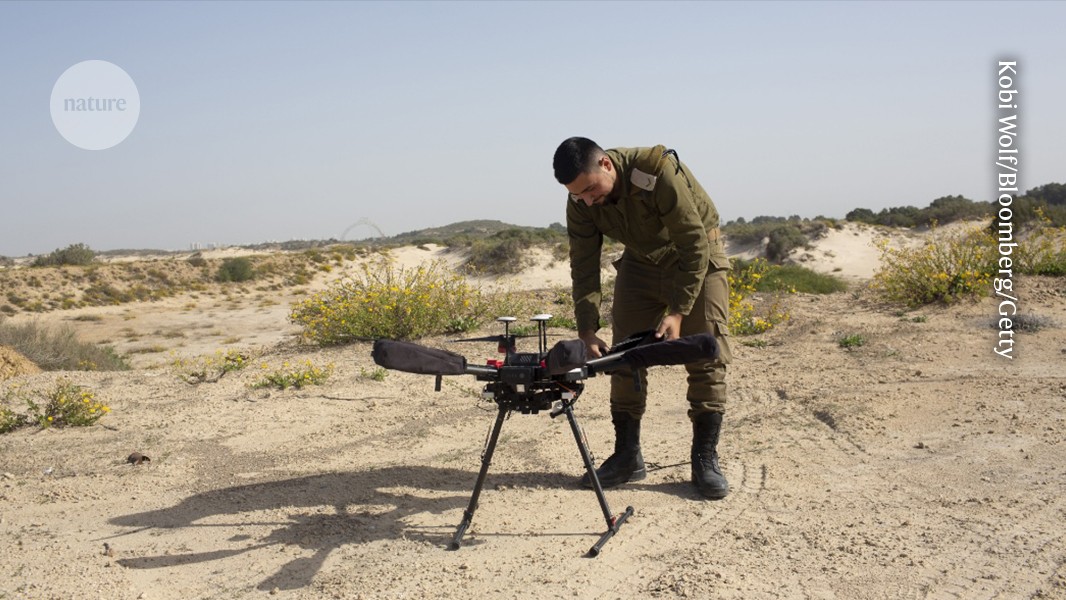
Israel was an early leader in developing drones for military purposes. Credit: Kobi Wolf/Bloomberg/Getty
Bytes and Bullets: Global Rivalries, Private Tech, and the Future of Modern Warfare Steve Feldstein Monoray (2026)
Valley of Death: How Big Tech is Fueling the Future of War Sharon Weinberger Little, Brown and Company (2026)
States have been competing to gain a technological advantage over others for millennia. More than 3,500 years ago, ancient Egyptians’ success in the race to mastering horse-drawn chariots helped them to dominate their region militarily. Today, a similar contest is under way as global powers vie for supremacy in artificial intelligence and technologies such as drones, space-based weapon systems and advanced semiconductors.
Two books examine this latest arms race and ask who might prevail. In Bytes and Bullets, former US state department official Steve Feldstein discusses how technological innovations are becoming “crucial pieces in a geopolitical chess match”. He examines cases including Israel’s early leadership in drone technology and the various innovative prototypes being tested on battlefields in Ukraine.
How AI is shaping the war in Iran — and what’s next for future conflicts
In Valley of Death, security-focused journalist Sharon Weinberger shares how technologies have been adopted by the US defence establishment. Rich in detail, her book takes readers inside the meetings, negotiations and contracting battles that have helped to make Silicon Valley an integral part of the US national-security apparatus.
Weinberger challenges the idea that Silicon Valley is inherently libertarian and instinctively hostile to government power. She shows instead how the Pentagon helped to nurture the early growth of many technology firms, how these companies amassed enough wealth and influence to operate independently of the state and how the defence establishment is now seeking to reforge ties with tech founders and investors who have greater autonomy than conventional military contractors ever did. She calls this evolving relationship the Pentagon–Silicon Complex.