// ARS TECHNICA — INTELLIGENZA ARTIFICIALE
AI/ML is becoming a performance factor in motorsport
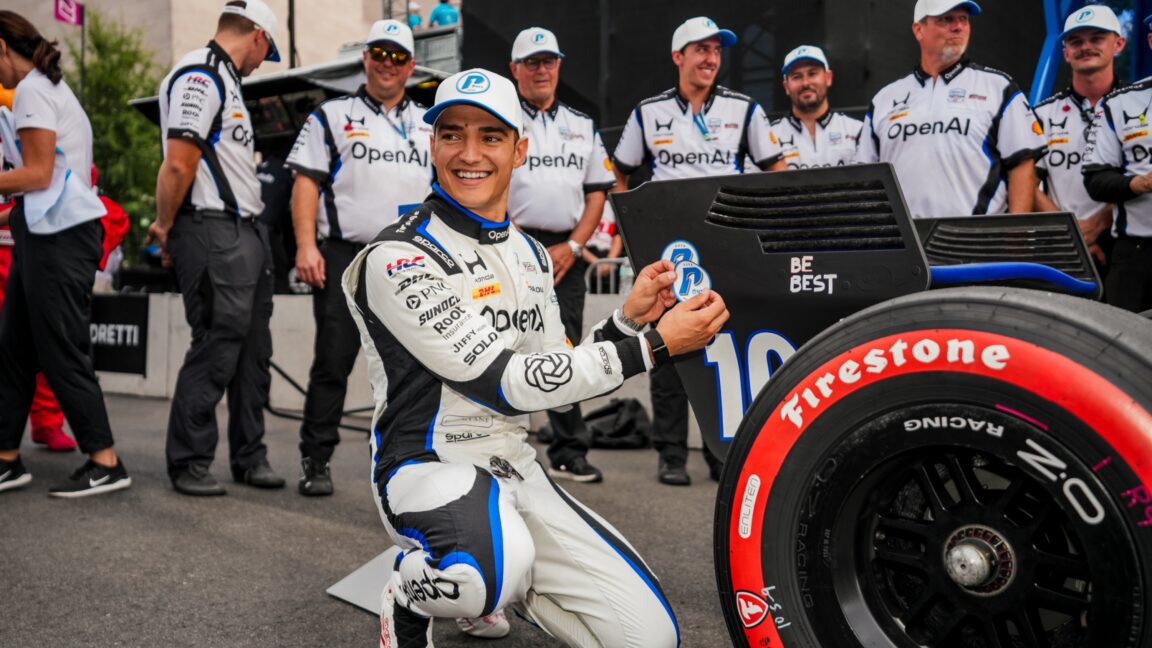
More than just a sponsor: OpenAI has been helping Ganassi with setups.
There’s been something of a change in the world of motorsport over the past few years. It has to do with where the money comes from. In the old days, it was tobacco, and to a lesser extent booze. Today such things are mostly banned, and when you look at a racecar covered in sponsor logos, you’re likely to see something crypto-, cyber-, or AI-related.
This makes sense—a larger and larger proportion of our GDP is wrapped up in those segments. They’re the ones with all the money, and it takes money to go racing. So at the amateur level, we’ve seen tech CEOs replace dentists as the privateer of choice: This past weekend’s Petit Le Mans included co-founders of GitHub, Crowdstrike, Shopify, and the creator of Ruby on Rails, to name a few.
But this is an instance where a sponsor can provide tangible benefits to their motorsports partner beyond a bank transfer, as Chip Ganassi Racing (CGR) and OpenAI have been showing in IndyCar this year.
Ganassi’s might not be the most well-resourced team on the grid, but it is the most dominant; its drivers have won the championship 13 times in the past two decades. First that was Dario Franchitti, then Scott Dixon. But today the man bringing home the big trophies is Álex Palou, who this year sealed his fifth title in six seasons. And at some races, it’s his car that has worn OpenAI’s colors.
The 2026 season was a harder one for Palou than some, winning a mere third of the 18 races IndyCar held. But that was still twice as many as anyone else. Eight poles was far better than anyone else could achieve, either. And it turns out that OpenAI and one of its researchers has been working with CGR and Palou on optimizing car setups. That collaboration is the subject of a documentary series on YouTube, and the second episode just went live this morning. (The longer Part One is here.)
This isn’t the first example of AI/ML tools showing their value in engineering- and data-driven motorsports. A couple of years ago we looked at how General Motors has been using AI tools to predict cautions from radio traffic, one of the few applications of LLMs as opposed to other AI/ML approaches. GM Motorsport has also built a tool to analyze crash data from trackside photographers within seconds, and it coordinates that all now from its new base in Charlotte, North Carolina. Cadillac’s new F1 team is supported out of there, too, as are most of Ganassi’s closest rivals in IndyCar. (Ganassi, though, is powered by Honda.)
Earlier this year, IBM and Dallara—which builds IndyCars as well as quite a lot of the other carbon-fiber race cars you see in perhaps too many different series to count—published research showing that AI can be trained on computational fluid dynamics data to speed up aerodynamic development. That’s also something that more than one F1 team has been doing with a company called Neural Concept.
In 1975, the late racing driver Mark Donohue called his biography The Unfair Advantage, and in it, he detailed how his methodical approach to engineering a race car gave him that advantage. And one might say that even before this partnership, Palou had that: the most dominant team and seasons with more wins and poles than everyone else. I wonder if anyone can catch him?