// NATURE NEWS — SPAZIO & SCIENZA
Human lung organoid modelling of tissue-resident antiviral T cell responses
Nature
(2026) Cite this article
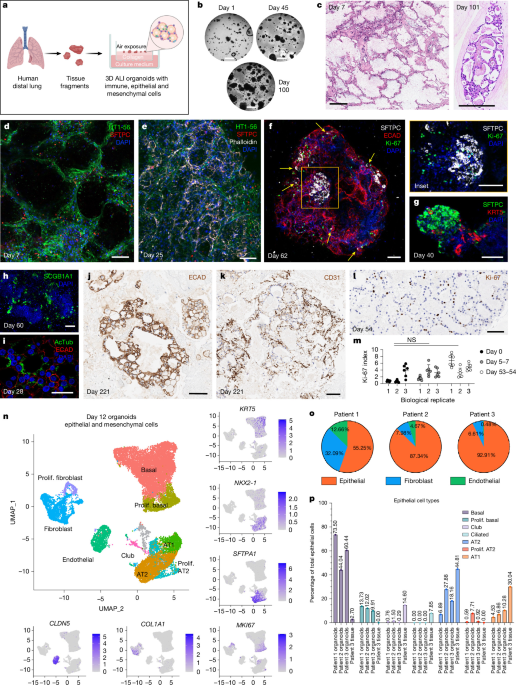
Tissue-resident immunity constitutes a first line of defence against pathogens and enables rapid innate and adaptive memory responses1,2,3. However, experimental studies have been hindered by a lack of holistic human in vitro models that enable epithelial infection in the context of tissue-resident immune subsets. In lung, differing notions of transient versus sustained residency of tissue-resident memory T cells (TRM cells) have challenged the extent to which anamnestic recall immunity to respiratory pathogens occurs locally or in concert with secondary lymphoid organs4,5,6. Here we generated long-term adult human distal lung organoids from intact tissue fragments in 3D air–liquid interface culture, which co-preserved epithelial and stromal components with endogenous lung-resident immune cells (T cells, B cells, natural killer cells and myeloid cells). The organoid T cells expressed residency and memory markers and preserved T cell receptor repertoires of cognate fresh tissue. SARS-CoV-2 infected the organoid lung epithelium, stimulated inflammatory cytokine production and, crucially, induced SARS-CoV-2-specific, tissue-resident T cell responses. Furthermore, boosting T cells within intact organoids with SARS-CoV-2 peptide pools blunted subsequent SARS-CoV-2 infection, consistent with a component of virus-specific protective TRM cell function in the absence of secondary lymphoid tissues. Overall, this immunocompetent lung organoid system demonstrates functional control of viral infection by lung-intrinsic memory T cell responses, provides a rationale for local vaccination strategies and validates a general platform for investigation of human tissue-resident immunity in health and disease.
This is a preview of subscription content, access via your institution
Access Nature and 54 other Nature Portfolio journals
Get Nature+, our best-value online-access subscription
Prices may be subject to local taxes which are calculated during checkout
scRNA-seq datasets have been deposited in Gene Expression Omnibus (GEO) with the accession codes GSE216049 and GSE344986. This includes raw, processed and final Seurat objects with all annotations. Bulk RNA-sequencing datasets (raw and processed files) have been deposited in GEO with the accession code GSE230398.
Zheng, M. Z. M. & Wakim, L. M. Tissue resident memory T cells in the respiratory tract. Mucosal Immunol. 15, 379–388 (2022).
Article
CAS
PubMed
Google Scholar
Yuan, R. et al. The roles of tissue-resident memory T cells in lung diseases. Front. Immunol. 12, 710375 (2021).