// ARS TECHNICA — INTELLIGENZA ARTIFICIALE
Nvidia's big bet on physical AI aims for safer robotaxis, humanoid robots
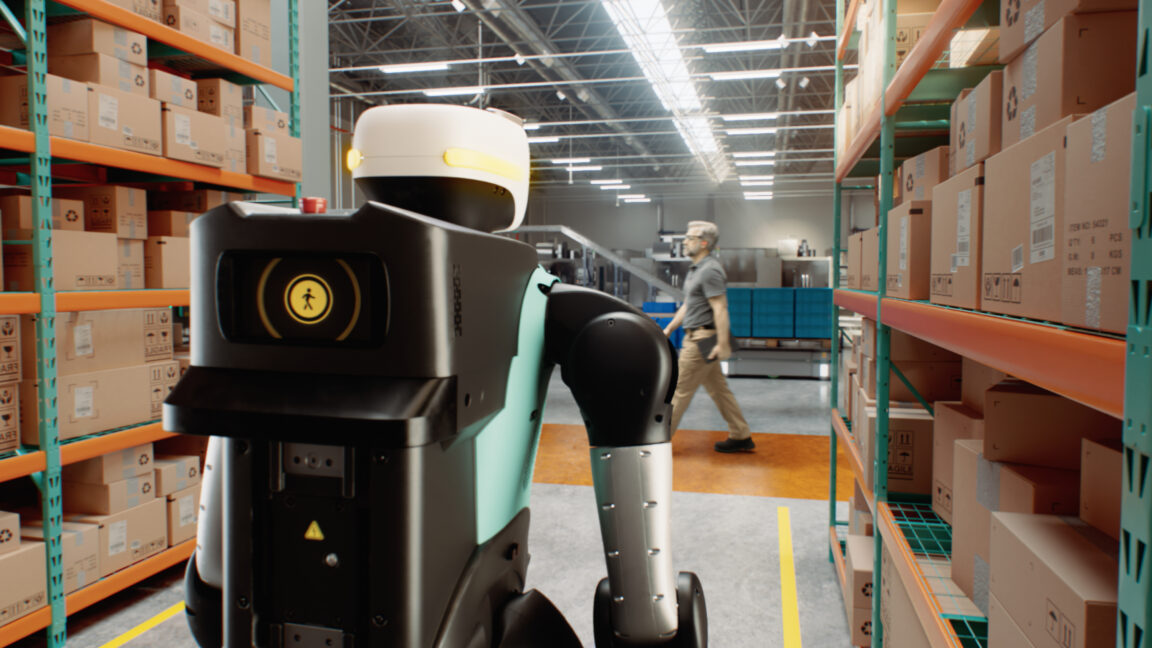
Full-stack safety solution for physical AI is being used by robotics companies.
Investors bullish on AI data centers may be fueling Nvidia’s multitrillion-dollar market capitalization, but the AI chipmaker has also bet billions of dollars on physical AI technologies such as robotics and self-driving cars. Part of that gambit has involved developing a full-stack safety system that companies can build upon to reduce the risk of their machines harming nearby people.
Nvidia’s Halos system launched in 2025 with hardware and software tools to help developers implement guardrails in self-driving cars and other autonomous vehicles. Then the company expanded its safety architecture to more physical AI technologies by announcing Nvidia Halos for Robotics in June 2026—with the goal of enabling safe deployments of autonomous mobile robots in warehouses, humanoid robots walking around inside a factory, or even surgical robots.
“Now the AI models are getting capable, the robot hardware is getting capable, and a thing we thought is going to be the next bottleneck is safety,” Amit Goel, head of robotics ecosystem and edge computing at Nvidia, told Ars. “So that’s why we launched our Halos for Robotics to unlock the capability of these systems.”
The expanded safety offering for robotics comes as Nvidia CEO Jensen Huang described the physical AI business as already driving nearly $10 billion in annual revenue for the company during an appearance on the All-In Podcast in March 2026. Huang previously began highlighting physical AI as Nvidia’s second-most important growth category in 2025.
So what does Nvidia’s full-stack safety system involve? It starts with hardware, such as the Nvidia IGX Thor computing module for robotics and industrial applications that has an independent processor dedicated to safety-related workloads. “In the context of physical AI, you need to have your functional system and your safety system all running on the same silicon,” Goel said.
On the software side, the Halos operating system was designed to enable constant monitoring of “every hardware block” and “every software library” to swiftly spot any failures, Goel explained. The system also isolates safety-critical computing workloads to avoid any potential interference.
The system also includes the Nvidia Holoscan Sensor Bridge that connects sensor data with safety-related computer processing in a way that can easily identify corrupted data. This can be embedded in individual hardware components, like a microcontroller or Field Programmable Gate Array.
Last but not least, the Halos package also includes Nvidia’s simulations for testing robots in virtual environments, and an inspection lab program that allows robotics companies and other partners to get quick feedback on any safety “artifacts” that arise during robotic development.
However, adapting Nvidia Halos from autonomous vehicles to robotics required accommodating many different definitions of safety. The definition of functional safety for autonomous driving generally remains the same across different automotive companies and countries, Goel explained. But a robotic vacuum cleaning a hallway will have very different safety considerations compared to a robotic forklift handling heavy payloads in a warehouse loading dock.