// ITS FOSS — LINUX & OPEN SOURCE
openEuler is Revamping the Development Experience of the Open Source Community With an AI Toolchain
Most Linux distributions are still figuring out where AI fits. Some are even blocking AI-based contributions while others are shipping AI tools in the system itself.
openEuler is doing something more comprehensive. It is embracing AI completely. From its development workflow to the operating system it offers to end users, AI is omnipresent. The aim is to move towards an AI-first ecosystem to give users an "AgentOS".
The project is putting AI into three places at once: the community's own plumbing, the workstation you develop on, and the operating system itself (so that it can be used by AI agents and harness like OpenClaw and Hermes).
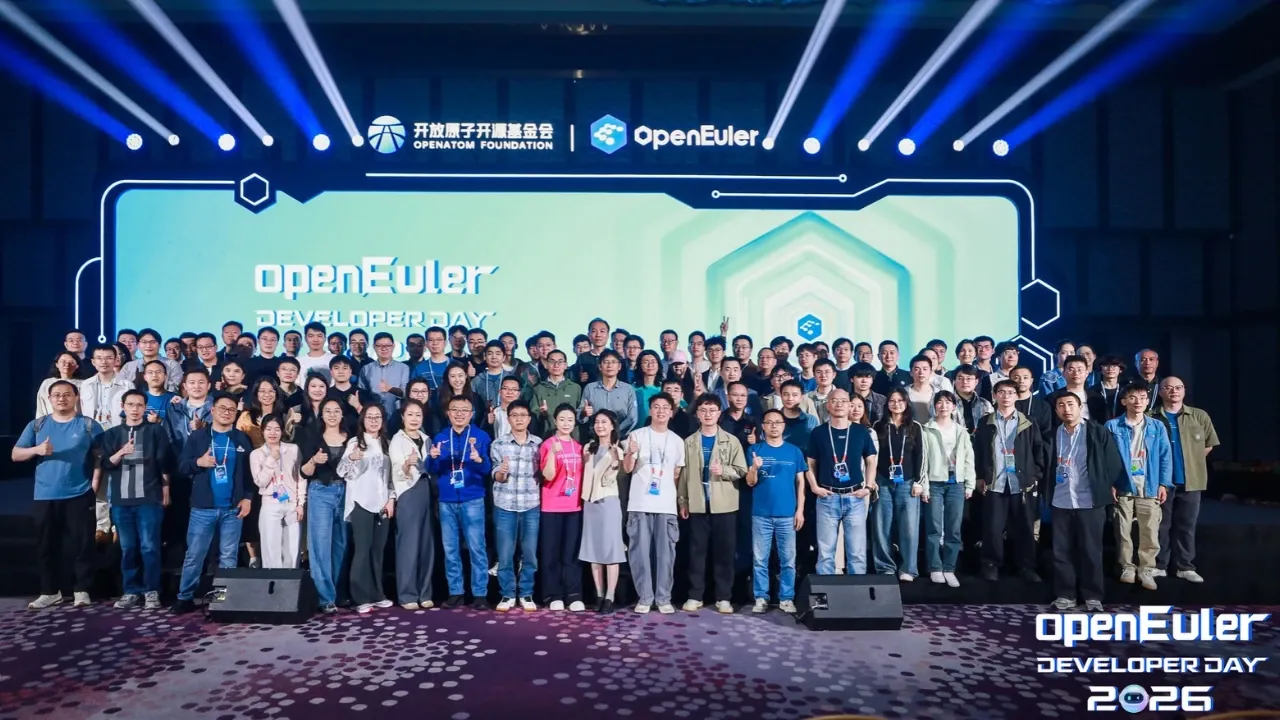
openEuler laid out this roadmap at its Developer Day 2026, and the focus is on improving developer experience (DX). That's a nice term to use, actually.
I haven't run any of this hands-on yet, so what follows comes from openEuler's material and public repositories. Feel free to check them out.
Before openEuler asks you to trust AI in your OS, it's putting AI to work on its own code. And I think this matters most for contributors, specially because it makes their job and life easier.
The openEuler community is adding AI-assisted review to its CI pipelines, starting with kernel patches. CI (continuous integration) builds and tests every patch before merging, so this means that AI checks on the code before a maintainer sees it. AI agents are also generating package spec files, the recipes that turn source code into RPM packages, which is exactly the tedious work that keeps new packagers away.
Vulnerability handling is where the work is most concrete. According to the community's April 2026 monthly report, the infrastructure SIG built a CVE repair agent team with 6 roles, from architect and reviewer to QA and a CI watcher.
It automates the path from parsing a CVE issue to submitting a fix PR, and when a build fails, it learns from the EulerMaker logs and updates its own rules. openEuler says this "significantly" shortened the repair cycle but hasn't shared figures.
The second piece is data. Community information is scattered across SIG pages, CVE advisories, and download mirrors. openEuler is using the Model Context Protocol, or MCP (an open standard that lets AI assistants call external tools and data), to give easier access to all this data.