// SPACE.COM — SPAZIO & SCIENZA
Can we protect historic sites on the moon from the coming lunar rush?
"The moon is part of the cultural landscape of Earth."
When you purchase through links on our site, we may earn an affiliate commission. Here’s how it works.
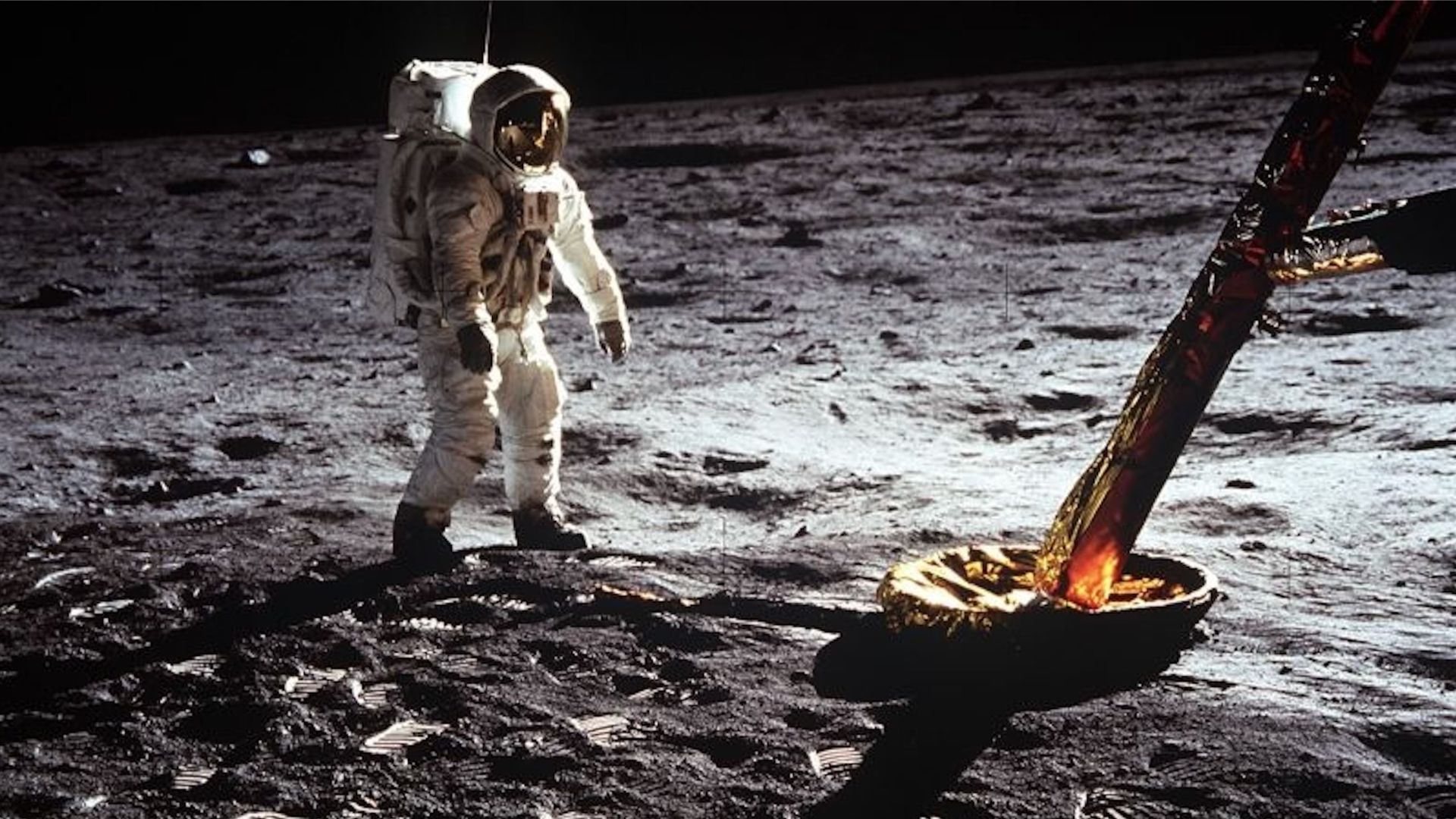
The moon is a historical landmark — a celestial body continually peppered with robotic landers shot from our home planet, as well as human footprints planted there by a dozen visiting moonwalkers from 1969 to 1972.
A recent gathering in Italy of the International Scientific Committee on Aerospace Heritage (ISCAH) looked at protecting lunar heritage with an eye toward developing guidelines for spacecraft deorbiting onto the moon's surface.
Particular attention was paid to the risks posed by the impacts of deorbited satellites and rocket stages, recently highlighted by the crash of a SpaceX Falcon 9 upper stage into the moon last August.
As pointed out in the meeting, as lunar traffic increases, controlled crash landings of moon orbiters and rocket stages are becoming an attractive end-of-mission disposal strategy.
There is limited knowledge regarding ejecta modeling and the effects produced by these impacts, said Luca Forassiepi. He spoke at the Sept. 14 meeting in Piza, which was called "Protecting Lunar Heritage: Developing Guidelines and Recommendations for Controlled Lunar Deorbiting."
"These effects have only been observed, and only partially, in a handful of historical cases. As a result, much of our current understanding relies on simulations, which necessarily involve a number of simplifications compared with reality," Forassiepi told Space.com.
"Because the moon is an airless world, any movement on the surface is going to stir up sticky, abrasive dust that erodes human materials," pointed out associate professor Alice Gorman, an Australian archaeologist and heritage consultant at Flinders University.
"This is a problem for cultural heritage sites," Gorman said. "Imagine the iconic Apollo 11 landing module, the Eagle, being worn away until it crumbles into dust itself."