// SPACE.COM — SPAZIO & SCIENZA
NASA's Perseverance Mars rover breaks interplanetary driving record — and it's far from done
When you purchase through links on our site, we may earn an affiliate commission. Here’s how it works.
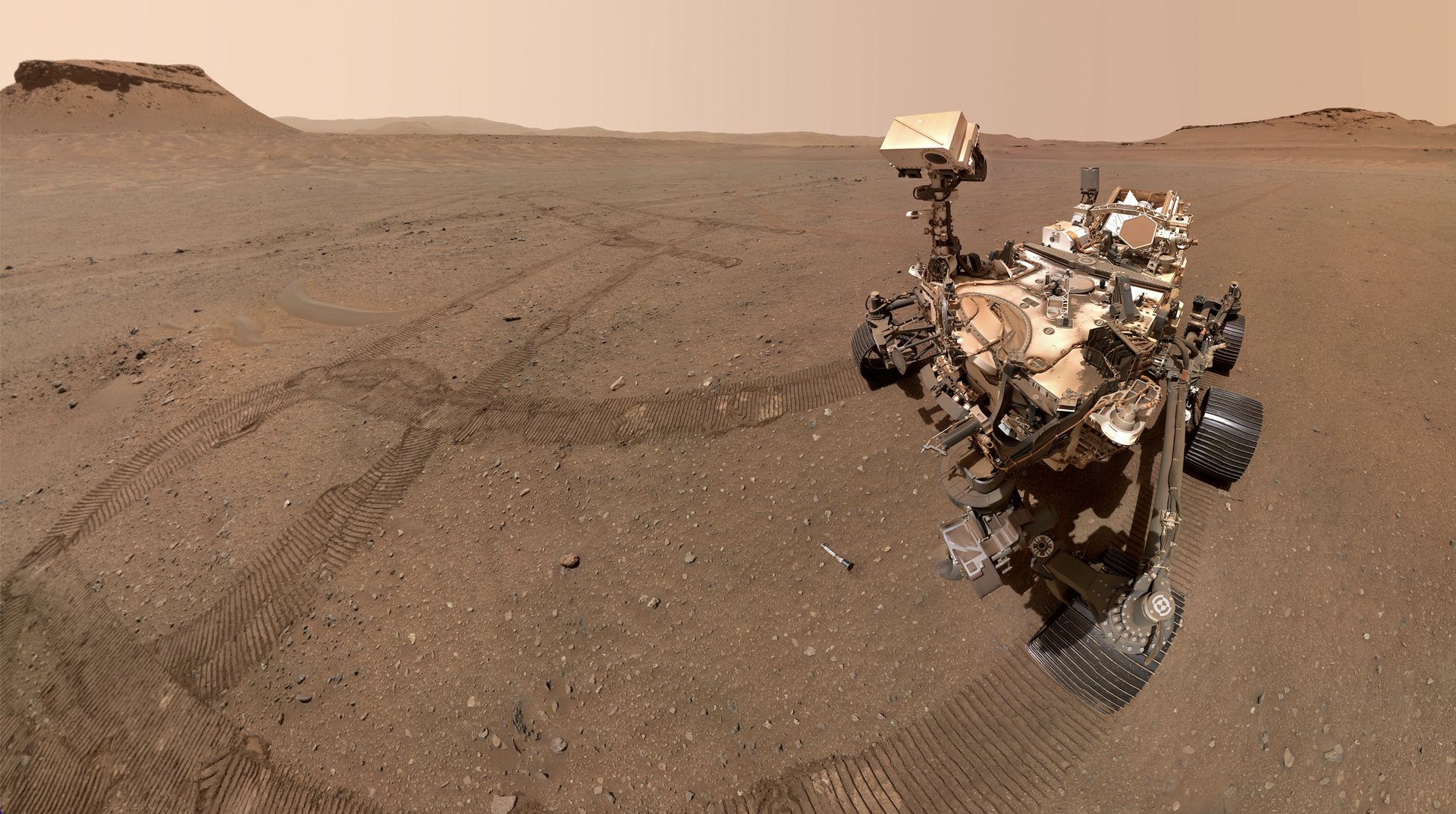
In a milestone achievement, NASA's Perseverance Mars rover has broken the record for most miles driven on a world beyond Earth.
On Oct. 11, Perseverance hit 28.10 miles (45.22 kilometers) traveled on Mars, breaking the record previously held by NASA's Opportunity rover which went 28.06 miles (45.16 km). It took Oppy 14 years to cover all that ground; Perseverance, by contrast, has been on Mars for just 5.5 years.
The new record is far from the end of Perseverance's journey, however; the mission team thinks the rover could eventually more than double the distance it's already traveled.
"Our original design was only planned to last for [about] 20 kilometers of driving," Mark Maimone, a rover driver at NASA's Jet Propulsion Laboratory (JPL) in Southern California, told Space.com.
Perseverance has set a new off-world record! 🏅
On Oct. 11, the rover's odometer hit 28.10 miles (45.22 kilometers), eclipsing the distance record set by NASA's Opportunity rover. 1/2 https://t.co/IThlI7dl2zOctober 12, 2026
"We've more than doubled that already … and we're looking really good to go for up to 100 kilometers total," added Maimone, who works as a designated principal in autonomous planetary rover navigation on Perseverance and helped to develop the autonomous driving systems on NASA's previous Mars rovers.
"So we could double what we've done so far," he said. "And we have great expectations that [Perseverance] can continue its mission of exploring and collecting really useful and beneficial samples that will tell us so much more about the history of Mars."
Indeed, Perseverance remains in great shape, mission team members stressed.
"We are very fortunate that all of Perseverance's original capabilities are more or less intact, especially for the science instruments," JPL's Vivian Sun, the mission's deputy project scientist, told Space.com.