// NATURE NEWS — SPAZIO & SCIENZA
China’s AI research is booming. Where is it headed?
Search author on:
PubMed
Google Scholar
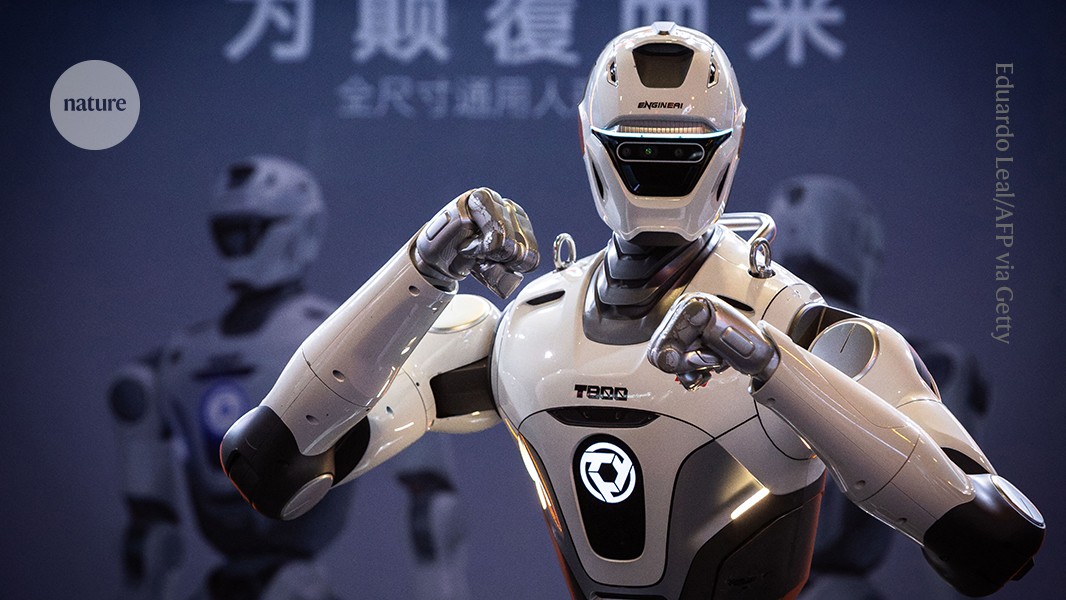
China is incorporating AI systems into robots (here, the EngineAI T800 seen at a 2026 exhibition). Credit: Eduardo Leal/AFP via Getty
As his graduation from a top Chinese university approached earlier this year, computer scientist Lu Yi faced a tough choice. Should he move to the United States to pursue a PhD in artificial intelligence, as Chinese high-fliers have so often done before? Or should he stay in China?
The United States pays AI scientists higher salaries, has the best hardware and hosts the world’s most advanced AI laboratories. But “the gap is getting closer and closer”, says Lu, whose name has been changed because he was concerned about speaking publicly on what he saw as a sensitive issue.
China’s extraordinary rise in science and how it will change the world
AI research in China is advancing rapidly. Many more AI researchers emerge from Chinese universities than from US institutions, and graduates are increasingly opting to stay put, or to return to China after spending time in the United States. China-based researchers dominate global AI-related publications, and firms such as DeepSeek and Moonshot AI make AI models with capabilities not far off those of their US rivals — and at a fraction of the price.
At the same time, the United States has become a less appealing destination for foreign researchers, with an increasingly restrictive visa system; Lu has seen friends’ applications rejected or delayed. “It’s a worry,” he says. Ultimately, Lu decided to stay in China.
The AI ecosystem in China differs in several ways from that of California’s Silicon Valley. In China, the line between academia and industry is more porous, and access to computing resources is much lower. This presents both opportunities and challenges. Chinese firms have been accused of copying US advances in their race to catch up, but they also have found techniques that make models more efficient.
“There are some that definitely think that the US is still the best place in the world to build a life and do this research, but more are questioning it,” says Scott Singer, co-director of the China AI Initiative at the Carnegie Endowment for International Peace in Washington DC.
China trains more AI talent than any other country. It has a pool of 51,000 active AI researchers compared with 14,000 in the United States, according to data from Digital Science (a firm operated by the Holtzbrinck Publishing Group, which has a share in Nature’s publisher, Springer Nature). The data, which are updated from a study the firm released last year1, also show that many of the researchers are at an early stage in their careers, with fewer older superstars than in the United States (see ‘Active AI researchers’).