// ARS TECHNICA — SPAZIO & SCIENZA
Microplastics in water aren’t inert and make damaging chemicals on their own
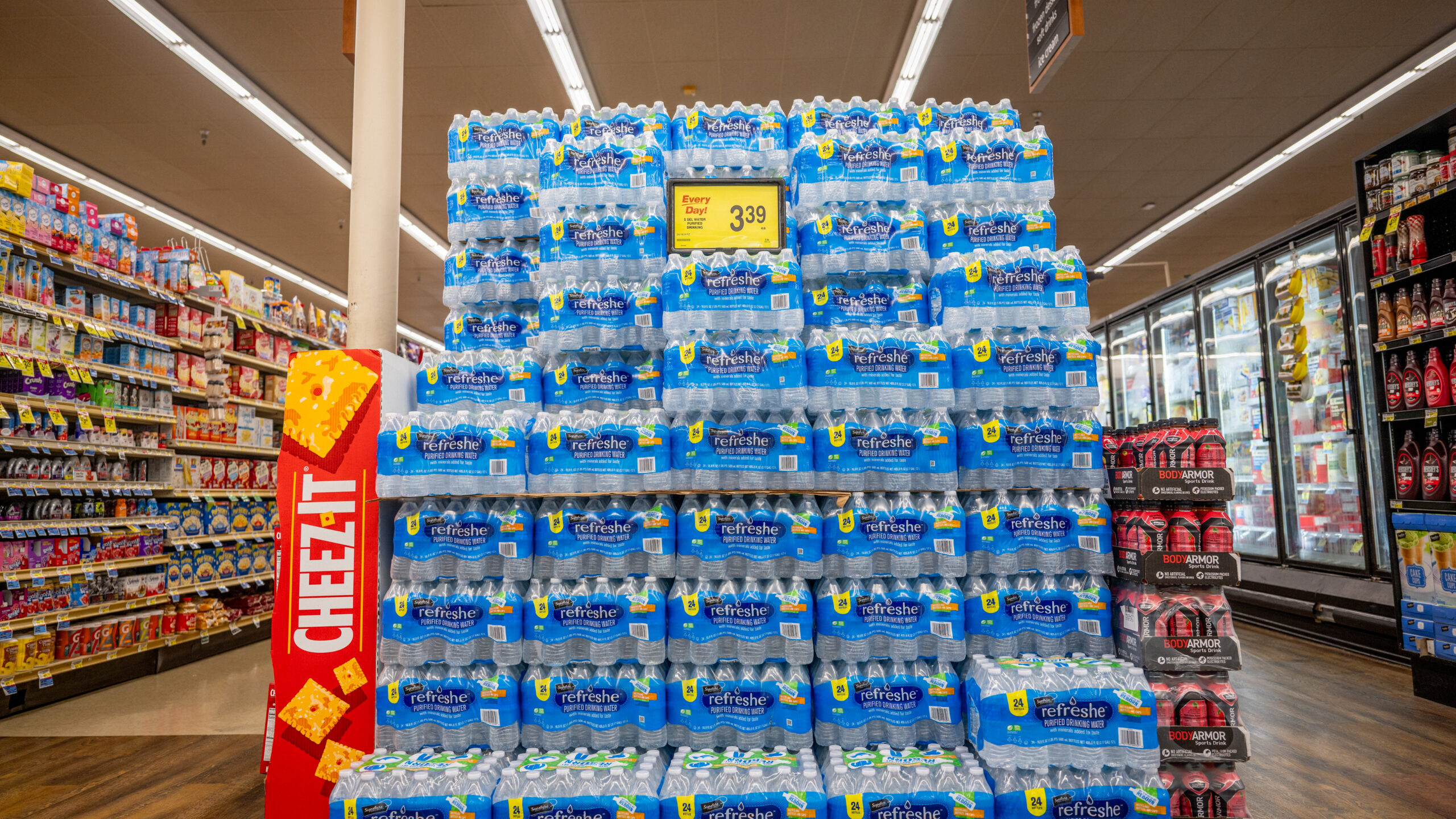
One reason plastics are used so often is that they’re chemically inert, meaning bags, food containers, and cups don’t react with what we put in them. Yet they can still break down into microplastics, which turn up in drinking water, human blood, arteries, and brains. The consequences of that are uncertain.
“Whether microplastics can directly cause human disease is still being researched,” said Wei Min, a chemist at Columbia University. In a new Nature study, Min’s team took a step toward answering this question by demonstrating that microplastics are likely not as chemically inert as we might expect.
Min’s lab has spent years working on microdroplet chemistry, studying how water broken into tiny droplets behaves at its boundary with air. These droplets have been reported to generate reactive oxygen species, or ROS, a family of harmful, oxygen-containing molecules. “ROS will essentially bump into proteins, lipids, DNA, and cause damage,” Min said. “You could break a DNA strand into segments. You could mutate DNA; you could misfold proteins.”
Many animal studies have tied microplastic toxicity to oxidative stress, which is caused by ROS. So the team wondered if the boundary between water and plastic might do something similar. “We got inspired by that field,” Min said.
In the first test, the team stirred polystyrene powder into water containing methyl orange, a yellow dye that ROS break apart. Over 10 days, the solution faded almost to colorless, losing nearly 90 percent of the dye. In ethanol or other solvents, the dye stayed intact. Min and his colleagues concluded that whatever chemistry polystyrene was undergoing needed water to happen. So they ran more tests.
First was electron spin resonance, a technique that directly detects radicals—atoms or molecules with an unpaired electron that makes them particularly reactive. The polystyrene powder and water mixture contained hydroxyl radicals, a highly reactive ROS.
Next, the team used a fluorescent sensor that lights up only when it reacts with hydroxyl radicals. “You don’t see it, but once it reacts with local ROS, it turns into a bright color,” Min said. Under a microscope, the glow concentrated on the surfaces of the plastic particles and kept building over time.
The effect was not unique to polystyrene either. Scientists tested six common plastics—polyethylene, polypropylene, polystyrene, PVC, PET, and acrylic—and all of them generated radicals. The most water-repellent plastics, polyethylene and polypropylene, were the most active, while PET and acrylic, which contain chemical groups that attract water, were the least.
“The simplest answer is the most water-repellent ones change the water structure the most,” Min said. In ordinary, or bulk, water, each molecule is held in a network of hydrogen bonds with its neighbors. But a few layers of water molecules pressed against a water-repellent surface lose some of those partners. “Their structure is no longer the regular water structure. They are perturbed, and their energy is also significantly increased,” Min said.
Water always contains a small number of hydroxide ions, and turning one into a hydroxyl radical requires stripping away an electron. In bulk water, that costs a lot of energy. But simulations run by the group showed that, at a polyethylene surface, hydroxide ions short on hydrogen bonds needed far less energy to form radicals. On top of that, the plastic surfaces build up a negative electric charge in water, which further lowered the energy cost.