// TOM'S HARDWARE US — HARDWARE & GADGET
Asus ROG Strix XG27AQGNV 27-inch G-Sync Pulsar gaming monitor review: Super smooth with unprecedented control
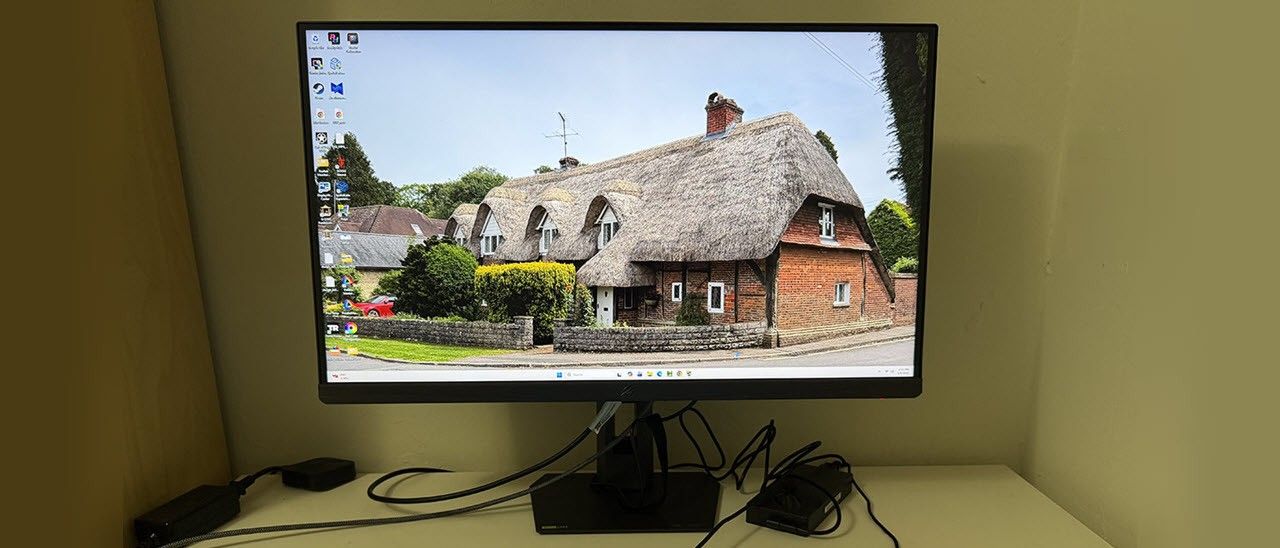
G-Sync Pulsar delivers OLED-level smoothness, responsiveness, and gaming feel to LCD monitors, and the Asus ROG Strix XG27AQNGV is a great example. With unmatched tweakability, it will satisfy gamers from casual to professional.
G-Sync Pulsar delivers OLED-level smoothness and responsiveness
No dynamic dimming means HDR contrast is the same as SDR
Why you can trust Tom's Hardware
Our expert reviewers spend hours testing and comparing products and services so you can choose the best for you. Find out more about how we test.
In the evolution of gaming monitors, there is nothing more significant than the advent of G-Sync and FreeSync (AKA, Adaptive-Sync or VRR). By syncing the video card output and monitor refresh rate in real time, all frame tearing and stuttering are eliminated. But there is one thing this tech cannot fix – motion blur.
LCD panels continuously display each frame until the next one arrives. This inevitably results in blur unless frame rates are very high. At least 500Hz is needed to truly call LCD motion resolution perfect. How to combat this? Well, you can buy one of the best OLED gaming monitors, which has a much faster panel response. You could employ overdrive, where the LCD panel anticipates the next frame. It’s also known as overshoot. If done precisely, that eliminates nearly all blur. Or you can insert a black frame by strobing the backlight. But this reduces light output.
Earlier this year, I reviewed my first G-Sync Pulsar display, the Acer XB273U F5. G-Sync Pulsar syncs the backlight’s LED array with the frame rate in real time. It’s a form of strobing but without the brightness penalty. And it’s the only way an LCD can achieve perfect motion resolution, i.e., when moving objects are as clear as stationary ones.
Thought of another way: an OLED pixel, or an LED, can flash 20,000 times per second. The TFT layer of an LCD panel is fast if it can flash 500 times per second.
Today, I’m reviewing another G-Sync Pulsar monitor, Asus’ ROG Strix XB27AQNGV. It’s a 27-inch QHD IPS panel with 360 Hz, HDR, and wide gamut color. Let’s take a look.
As a ROG Strix display, the XB27AQNGV is a little less expensive than the ROG Swift line and gives up only a few minor features. Anything pertaining to game performance is included. The max refresh rate is 360 Hz at QHD 2560x1440 resolution. The panel is IPS, or as Asus calls it “Ultra-Fast IPS”. And it is, as you’ll see in my Nvidia LDAT tests on the next page. G-Sync Pulsar is there with low frame rate compensation that eliminates flicker when speeds drop. You also get a traditional overdrive with three presets and a user control with 400-step precision.