// ARS TECHNICA — MONDO
UN says we're going to blow past 1.5º warming, offers a "now what?" answer
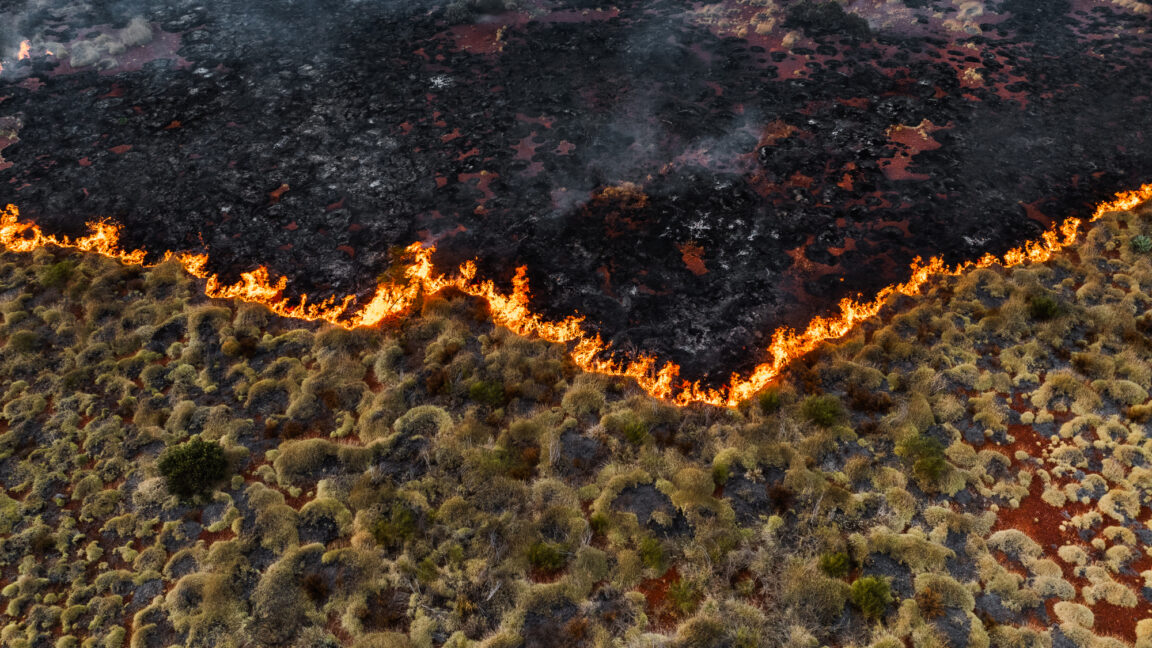
Best case is now an overshoot to 1.8º C, accompanied by massive carbon removal.
In 2015, all but two countries agreed to make an effort to keep global temperatures from reaching 1.5° C above pre-industrial readings. Since then, most of the world has largely treated what they signed on to as aspirational, and one of the largest emitters (the US) has alternately withdrawn and recommitted to the agreement. Meanwhile, the planet has responded as expected to steadily rising carbon emissions and appears to be practically at the 1.5° limit.
On Wednesday, for the first time, the United Nations Environmental Programme (UNEP) acknowledged that reality, and conceded that the goal of keeping warming below 1.5° was no longer a viable one. Instead, its new goalposts focus on keeping both how long we exceed that limit and how much we exceed it by, at a minimum. Doing that will require both dramatic emissions cuts now and the removal of hundreds of gigatonnes of carbon dioxide from the atmosphere before the century is out.
Depending on which baseline you use to establish pre-industrial temperatures, as well as which reconstruction of global temperatures you rely on, the world has either gotten very close to, or already exceeded the 1.5° milestone. The current El Niño event, which appears exceptionally strong, will almost certainly mean that we’ve gone over it no matter which records you choose.
The UN relies on temperatures averaged over a few decades to determine where we’re at, which means we have technically not gone above the limit yet. But, as temperatures seem stubbornly disinterested in dropping much even after extremely hot years, we’re likely at the start of the period where the 1.5° goal is passed. So, while it’s not technically too late to get on a pathway that keeps us below this, practically it’s already too late.
UNEP’s acknowledgment of this reality is straightforward, albeit couched in a bit of optimism. “Decades of insufficient climate action makes exceedance of 1.5° C unavoidable,” its latest report states. “Whether it will be temporary crucially depends on decisions taken today.” In other words, we might be committed to exceeding the goal, but that doesn’t necessarily mean that we’re accepting that global temperatures will need to stay above the 1.5° mark.
The Paris Agreement’s means of getting to that goal was to have its signatories set emissions-reduction targets and then progressively expand those as policy tools and technology matured. Progress would be measured at key points through a “stocktake” process. But not a lot of countries followed up on what they agreed to. “While the year 2030 is drawing closer, collectively countries have still not aligned policies with [agreed to] targets,” UNEP concedes. In fact, the gap between targets and actual policy would look even worse if the US were still part of the process, instead of seeing the Trump administration pull out of the agreement a second time.
A decade into the process, the needed tightening of policies has also been insufficient. In its new analysis, UNEP highlights that existing policies would likely leave us at 2.8° C above preindustrial temperatures by the end of the century, while even the stretch goals under the Paris Agreement would drop that by just 0.2°. Many countries have set net-zero goals outside of the Paris Framework, but including all of those would still leave us at 2.1° C above preindustrial temperatures by the century’s end. In all of these scenarios, temperatures would continue to rise in the ensuing century.
And we don’t seem to be closer to getting our act together. Emissions were largely flat between 2024 and 2025 (there appears to be a slight decline, but within uncertainties of zero change), and emissions from burning fossil fuels were actually up, offset by better land-use management. But to have reached any significant goals, they needed to be dropping by now.
But UNEP is a rare organization in that it’s willing to say the worst