// NATURE NEWS — SPAZIO & SCIENZA
Emotion regulation capacity lacks a shared neural signature
Nature
(2026) Cite this article
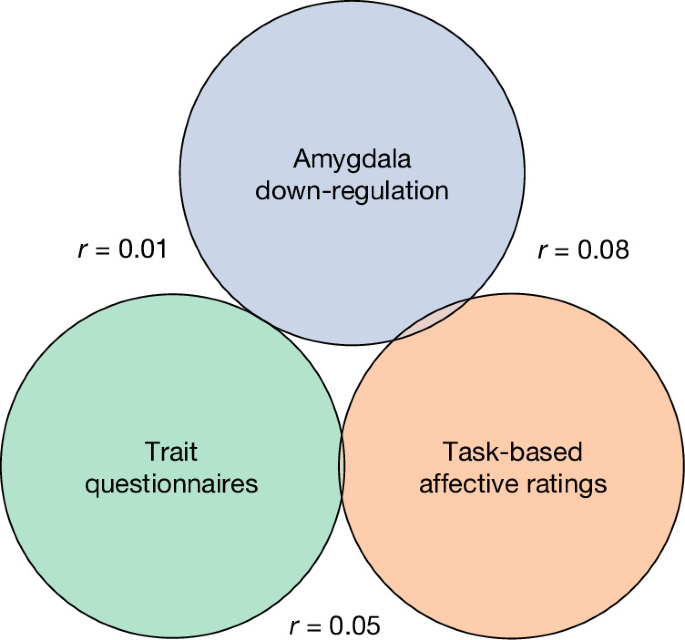
Cognitive reappraisal refers to changing how one thinks about a situation to alter its emotional impact. It is central to well-being1 and engages prefrontal regulatory circuits2, prompting the assumption that their activity reflects a person’s capacity to regulate emotions3,4,5. Yet evidence for this assumption remains inconclusive and has not been established at scale. Here we analysed 40 task-based functional magnetic resonance imaging (fMRI) datasets in a preregistered consortium with 2,175 participants and show that three widely used indicators of reappraisal capacity—trait questionnaires, task-based affective ratings and amygdala down-regulation—do not converge on a common core. Moreover, none of the three indicators showed the expected association with canonical prefrontal regulatory circuits. Trait questionnaires showed no detectable neural associations across the brain and task-based affective ratings were instead associated with responses in the amygdala and sensorimotor cortices. At the process level, canonical control circuits were engaged during both emotion generation and reappraisal, challenging their presumed specificity for emotion regulation. These findings caution against using activation in putatively regulatory brain regions to infer how well a person regulates emotions, with implications for neural biomarkers, interventions and psychoeducation that link emotion regulation difficulties to specific regional brain deficits.
Emotion regulation is a core determinant of mental and physical health1. It encompasses the strategies that people use, intentionally or automatically, to influence their emotional experience. Among these, cognitive reappraisal—changing the interpretation of a situation to alter its emotional impact—has received particular attention in psychology, psychiatry and the broader public. It is central to cognitive-behavioural therapy and linked to resilience, lower symptom burden and improved daily affect1.
Neuroimaging studies have extensively mapped the neural basis of reappraisal. Functional magnetic resonance imaging (fMRI) consistently implicates a network of lateral and medial prefrontal regions, often along with reduced amygdala activation during reappraisal of negative stimuli2. These findings have informed neuromodulatory interventions for emotion regulation deficits6,7,8. Still, they are based primarily on within-person designs that contrast experimental conditions such as ‘reappraise’ versus ‘view without regulation’ in the same individuals, and many studies and broader theories extend these neural within-person mechanisms to explain between-person individual differences in well-being or psychopathology4,5. This extension is not necessarily warranted.
Extending within-person neural mechanisms to explain between-person differences risks the ecological fallacy9: associations at one level need not hold at the other. For instance, people who habitually use reappraisal report better well-being than others. However, in daily life, reappraisal often occurs in response to stressors and may therefore coincide with worse-than-average momentary mood.
Compounding this, prefrontal regions that are engaged during reappraisal also participate in working memory, response selection and pain processing10—limiting their specificity as emotion-related markers of regulatory function. Task designs, moreover, may not mirror naturalistic regulation, raising questions about ecological validity and relevance for individual-difference research11,12. A recent systematic review found partial effect convergence in prefrontal and amygdala circuits, but studies were underpowered13 (median n = 25) and too heterogeneous for formal meta-analysis3. In turn, meta-analyses on reappraisal in mental disorders have yielded mixed results, with inconsistent findings in the prefrontal cortex4,14,15.
To resolve this, we conducted a preregistered consortium analys