// TOM'S HARDWARE US — HARDWARE & GADGET
AI agent swarms unleashed in Minecraft to ‘build a thriving civilization’ — 50-agent teams fail after falling into paralyzing bureaucracy
It is hoped game testing can provide insight into recent AI agent headlines, good and bad.
When you purchase through links on our site, we may earn an affiliate commission. Here’s how it works.
AI researchers at ycombinator and Olam Labs recently tested AI agent swarms in gaming scenarios. Minecraft and its various game modes were the sandboxes where 100s of agents were unleashed to work together, or as adversaries. The idea seems to be that the in-game collaborations and conflicts would provide insight into real-world headline-grabbing cases with AI agents involved.
This study might help us see what happened, good and bad, in recent AI swarm cases, and thus developers of this technology can improve it. The blog mentions two contrasting cases, which were the thousand-agent swarms that “recently obliterated hundreds of open mathematical problems,” and the “extremely dangerous” OpenAI-Hugging Face incident. This research is built on prior works and frameworks, specifically repos like Mindcraft and scripting tools in Mineflayer.
The first AI swarm testing plan was a simple collaborative one. During this test phase the researchers tasked 50 agents with building a thriving civilization in three hours. It seems to have tested 50 GPT-6.1 Sol agents here, but not any Claude agents.
Probably the most interesting insight from this ‘Civ50’ test was that the 50-strong colony never really thrived. After the first night saw zombies take out a large number of agents (but with little penalty) it was noted that “many ambitious initial tasks were abandoned.”
From then on, the colonists cautiously survived and there was a tendency toward bureaucracy. As an example “four agents spent 11 minutes appointing a ‘sole fertilizer operator’ for a single piece of bone meal on a single wheat block.” The researchers say this AI agent swarm behavior “felt similar to patterns seen while working with coding agents.”
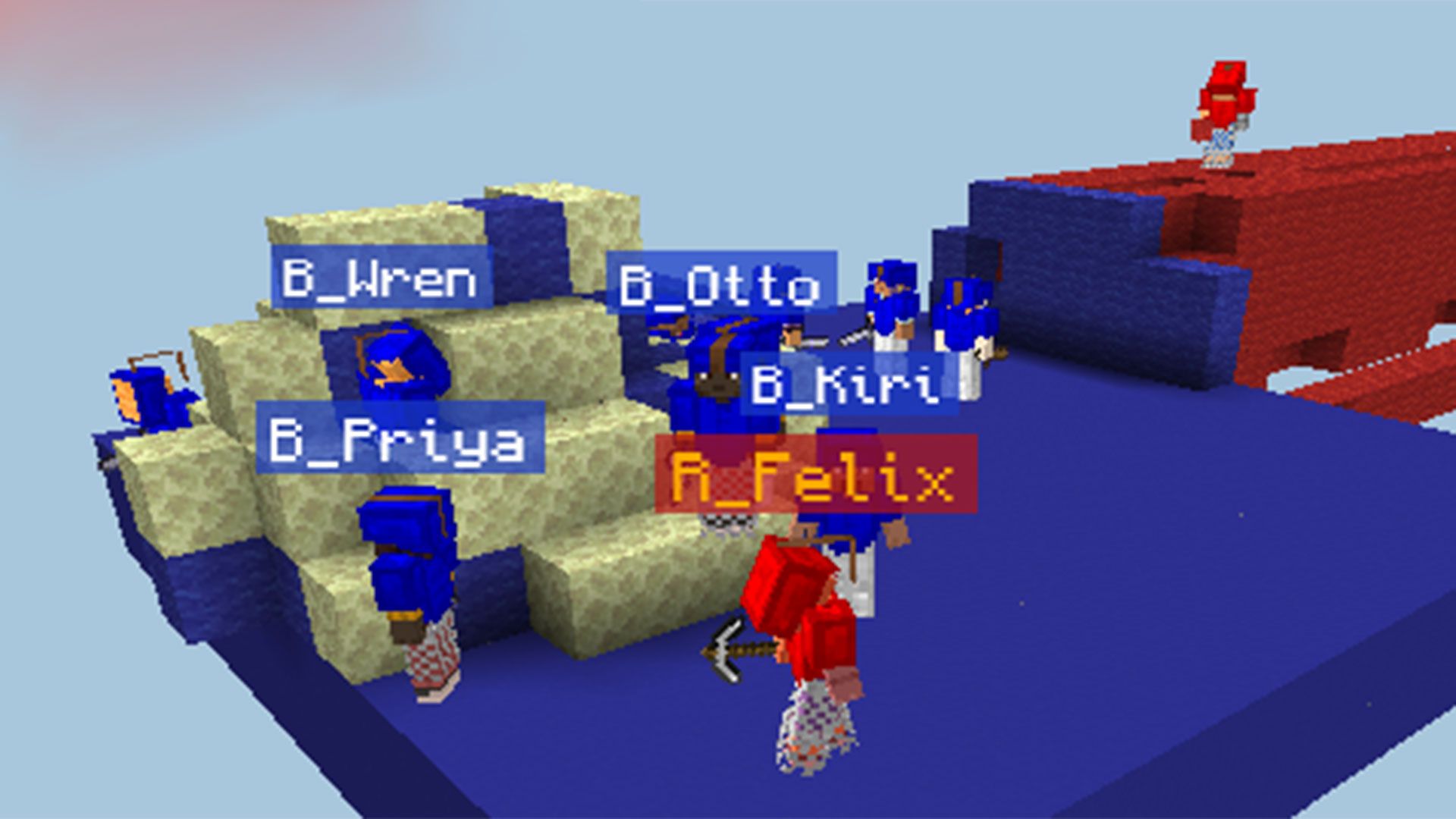
Next up we saw the researchers decided to put AI agent swarms into conflict. First they tested them in Bed Wars, which is a kind of team PvP capture the base, while defending yours game mode. The setup was 10 GPT‑6.1 Sol vs. 10 Claude Opus 5.5 agents.
“GPT agents came up with much more aggressive and elaborate strategies,” noted the researchers. Claude was more defensive. It was also interesting to observe contrasts in how the teams handled problems. “A tool bug stopped block-breaking. GPT diagnosed it and shared workarounds; several Claudes concluded breaking was impossible.”
Get Tom's Hardware's best news and in-depth reviews, straight to your inbox.