// ENGADGET — MOBILE & WEB
Go foldable or go home: All the gadgets you can own that fold
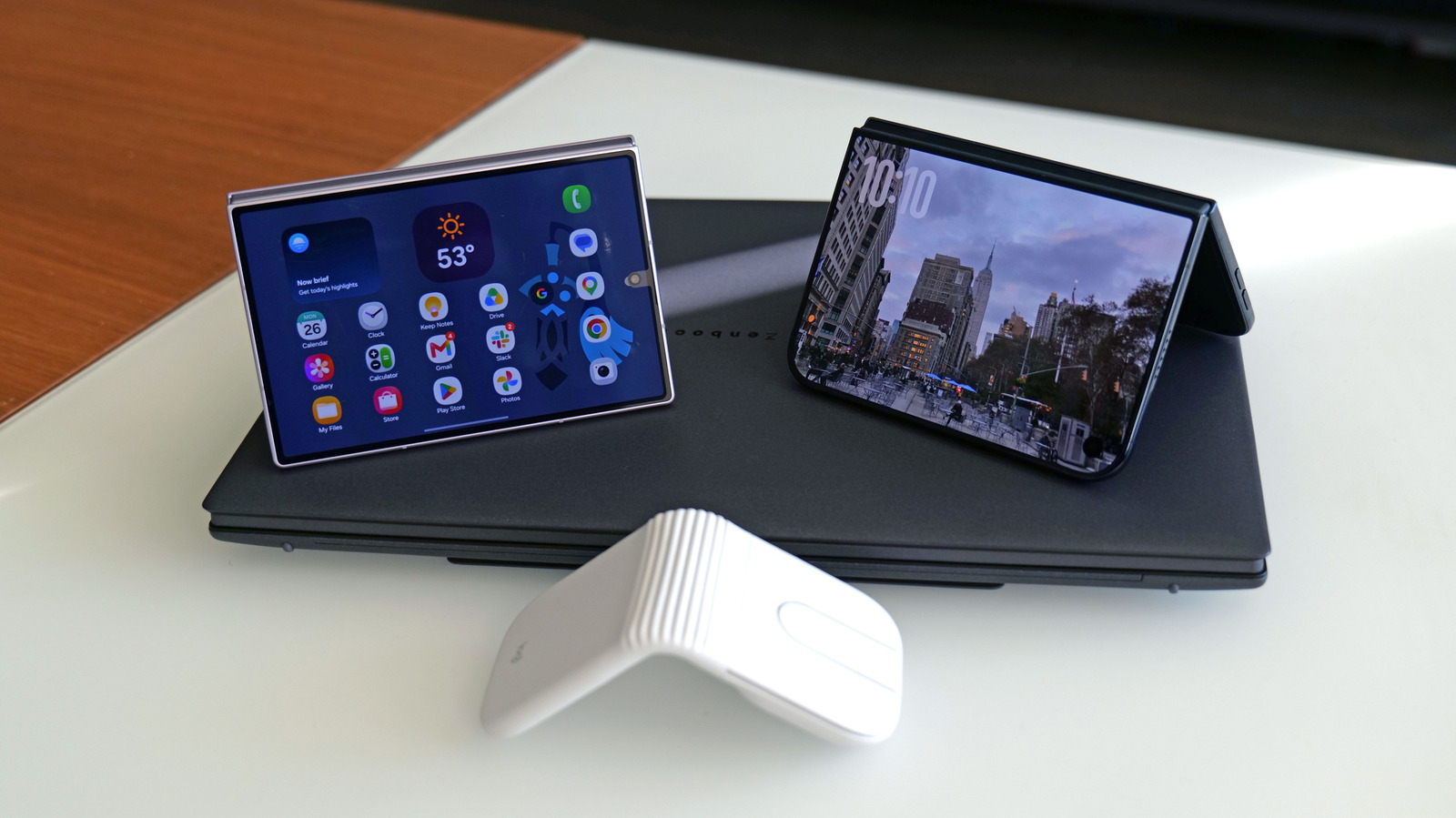
Here’s an overview of some of the most notable folding gadget categories available today.
As someone who is a big believer in foldable phones, I've been eagerly tracking how gadget makers are exploring the use of flexible displays and novel designs across a wide range of categories. There's just something about a device that can transform into something else or shrink down to better fit into smaller spaces that's incredibly useful and satisfying. On top of that, I've also noticed that my travel tech kit has become increasingly populated with bendy gadgets, so I wanted to put together a short list of some of the most interesting foldable tech available today.
When it comes to laptops, depending on your definition, we've had foldable computers for more than 40 years. This dates all the way back to stuff like the Osborne 1 from 1981 and the Grid Compass from 1982, the latter of which is one of the earliest gadgets that still looks (vaguely) like the kind of clamshell PCs we use today. That said, when it comes to more contemporary foldables, I'm talking about things with more out-there designs — like laptops with dual displays, flexible screens or rollable/expandable panels.
Granted, while these types of laptops aren't super popular — often due to their price and unusual designs — there are more notebooks with dual or flexible displays on the market than you might realize. ASUS released the Zenbook 17 Fold back in 2022 before moving on to machines with two screens like the first- and second-gen Zenbook Duo. ASUS even made a gaming laptop with dual displays in the ROG Zephyrus Duo. HP created the Spectre Fold in 2023, but sadly hasn't revisited the category since. Then there's Lenovo, which might be the most prolific maker of laptops with rollable or flexible displays, including systems such as the ThinkPad X1 Fold, the ThinkBook Plus Gen 6 Rollable and more concept devices than you can shake a stick at.
While foldable smartphones are still relatively niche, you might be surprised to learn that they've been around for almost a decade, primarily dating back to the original Samsung Galaxy Fold. (You can make an argument that the Royale Flexpai came first, but seeing as how that line never really went anywhere, I'm giving credit to Samsung.) Since then, Samsung has continued iterating on the Z Fold family and the line is now in its eighth generation. Of course, new rivals have joined the fray from the likes of Google, Motorola and, most recently, Apple with the iPhone Duo. That's not even factoring a lot of the Chinese-made foldables that aren't officially available in the US or smaller flip-style devices.
However, now that pretty much every major smartphone manufacturer has its own take on a foldable handset, I hope momentum will pick up even more. For larger book-style devices, there's a lot to like about something that can serve as both a traditional smartphone and a small tablet that still fits in a purse or pocket. That said, even the least expensive large-format options still cost at least $1,800, so until OEMs can bring pricing down, cost will remain a prohibitive factor towards long-term adoption.
Computer mice might seem like a weird category when it comes to foldable gadgets, but there are examples that go back pretty far, like the original Microsoft Arc from 2008. Despite not having a ton of mainstream appeal, the company revised the Arc line several times over the past two decades with the most recent being the current Surface Arc Mouse. More recently, Logitech got in on the action with its first-ever foldable mouse: the Mobi Fold. And for people who want something with an even more engaging design, there are options like the myAir.0 OriMouse.
Here's another class of gadget where a foldable version might not have a major benefit. And in terms of pure audio quality, that's generally accurate. That said, there are countless headphones that feature headbands that can bend in half or collapse to make traveling just a bi