// SPACE.COM — SPAZIO & SCIENZA
NASA's Voyager 1 probe bounces back from communications glitch in interstellar space
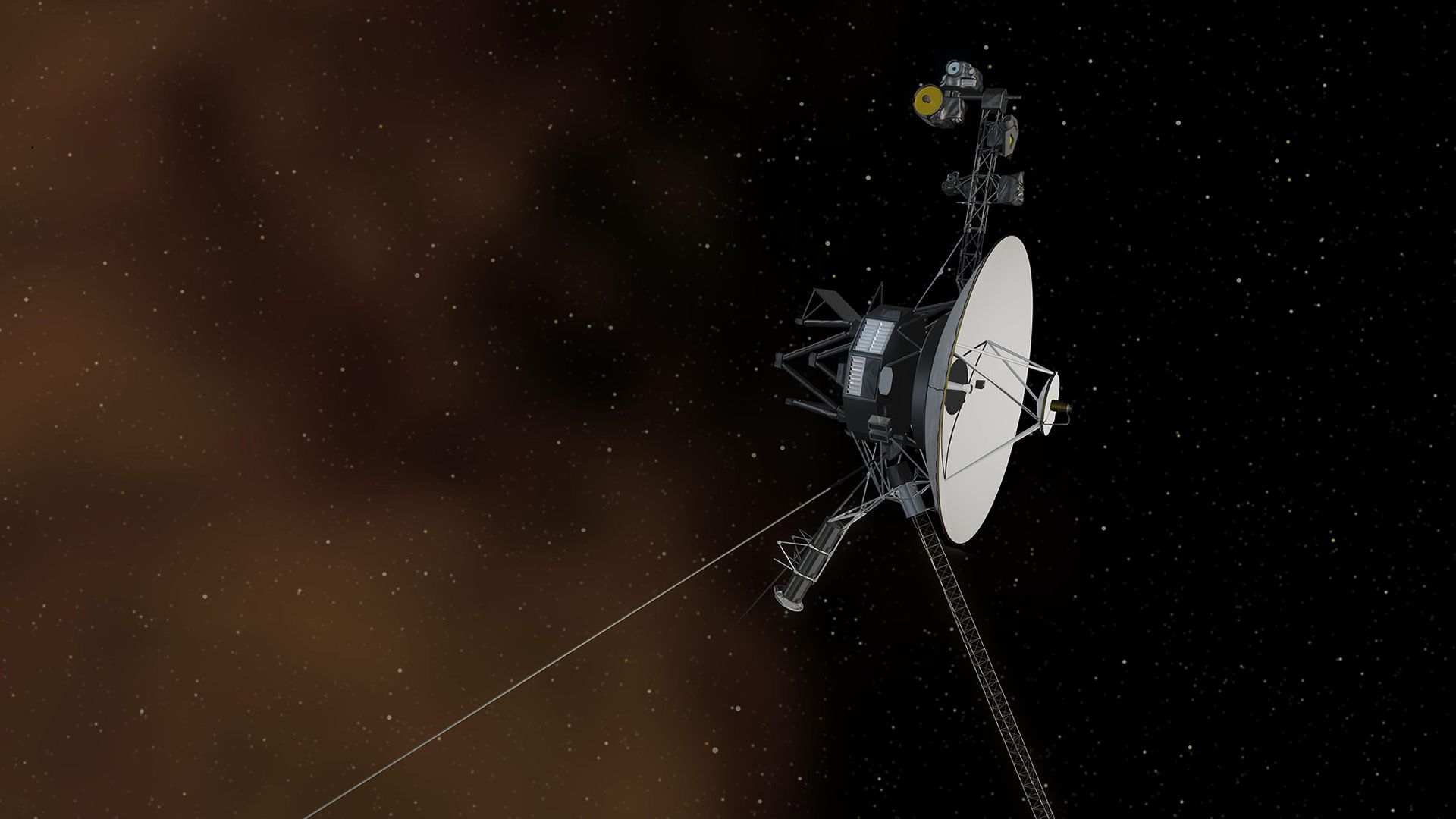
"This is the first time we've seen the spacecraft do something like this."
When you purchase through links on our site, we may earn an affiliate commission. Here’s how it works.
Voyager, 1, humanity's most distant spacecraft, is back in contact after briefly losing touch with Earth last month.
The spacecraft stopped phoning home for about 48 hours between Oct. 18 and 20 due to a communications glitch that Voyager 1 resolved on its own, before engineers could send the long-running spacecraft a remote fix.
"This is the first time we've seen the spacecraft do something like this, but we are also at a point in the mission where we have to expect the unexpected," Kareem Badaruddin, Voyager mission manager at NASA's Jet Propulsion Laboratory (JPL), said in an agency statement about the incident on Oct. 29.
Voyager 1 is almost one light-day from Earth, meaning that a command takes nearly a day to reach the spacecraft and a response takes another day to come back to our planet. The spacecraft will reach the light-day milestone on Nov. 18, at 16.09 billion miles (25.89 billion kilometers) from Earth.
NASA's Deep Space Network of three antennas does check-ins to make sure the spacecraft is doing well. On Oct. 18 and 19, Voyager 1 did not respond. Its signal fortunately reappeared on Oct. 20.
"Engineers still are investigating what caused the communication loss," JPL added in the statement, but said it appears Voyager 1 went into a sort of safe mode. "The team has so far determined that one group of thrusters went offline and their backups turned on. Such a swap is programmed to occur automatically if the spacecraft computers detect something amiss with the active thrusters."
Voyager 1 and its still-operational twin, Voyager 2, both launched in 1977 on an initial mission to explore planets in the solar system. The two spacecraft took advantage of a rare alignment that allowed them to swing from Jupiter to Saturn to Uranus and Neptune using a minimum of fuel, although funding to explore the more distant planets and moons was not guaranteed at launch.
The spacecraft duly swung by Jupiter's and Saturn's systems (some months apart from each other) to great acclaim before parting pathways. Voyager 1's close-up view of Saturn's rings as well as the moon Titan — which may have prebiotic or pre-life chemistry — altered the spacecraft's trajectory to put it high above the plane of the solar system. Meanwhile, Voyager 2 flew on to Uranus and Neptune in 1986 and 1989, respectively, providing the only up-close view of these planetary systems to date.