// SPACE.COM — SPAZIO & SCIENZA
Meteorite that landed in Cape Cod was a 'lone wolf' from the outer solar system, scientists find
"We cannot determine its exact history, but we found no association with any known meteor shower."
When you purchase through links on our site, we may earn an affiliate commission. Here’s how it works.
Thanks to a combination of radar, infrasound, dash-cam and security camera footage, astronomers have tracked the bright daytime meteor that fell over Cape Cod Bay in May 2026 back to its origin as a small asteroid perturbed by Jupiter and sent on a comet-like orbit towards Earth.
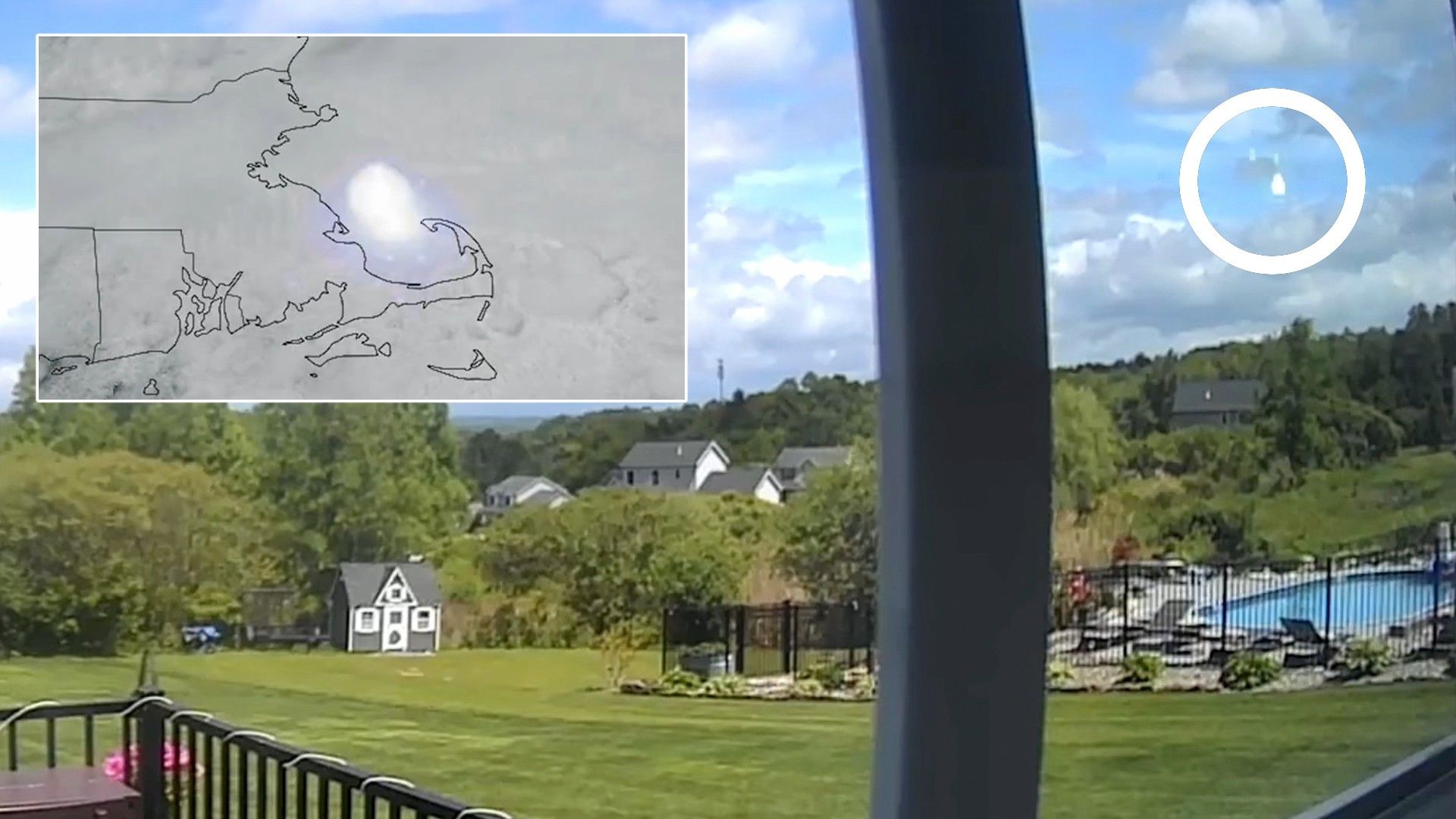
Meteor fireballs visible in the daytime are referred to as 'bolides'. At 1:06 p.m. local time (18:06 UTC) on May 30, 2026 one such bolide was widely witnessed falling out of the sky over coastal Massachusetts, with members of the public also reporting an associated sonic boom that rumbled across the north-eastern coast of the United States.
Now, a team of scientists from Europe and the United States, led by space physicist Juha Vierinen of the Arctic University of Norway in Tromsø, have patched together measurements from a meteor-observing radar network, regular weather radar, infrasound stations and camera footage to fully characterize the fall of this meteoroid and trace its orbit around the sun.
Key to these observations were measurements by the Spread Spectrum Interferometric Meteor Observing Network (SIMONe) based at the Massachusetts Institute of Technology's (MIT's) Haystack Observatory. SIMONe is a project jointly developed by MIT, the Arctic University of Norway and the Leibniz Institute of Atmospheric Physics in Kühlungsborn, Germany.
"We were fortunate that the event occurred within the coverage of SIMONe," Vierinen told Space.com.
This is echoed by Ryan Volz, a radio scientist at Haystack Observatory who is a member of the team who studied the May 30 bolide. "We got pretty lucky to observe this one," Volz told Space.com. "A bolide like this would have to enter the atmosphere within about 62 miles (100 kilometers) of a SIMONe-like meteor radar system for the head echoes we saw to be detectable, and there are only a handful of places in the world that currently meet that criteria."
A head echo is what radar sees when a meteoroid – what we call the lump of rock that becomes a meteor while it is still in space – enters Earth's atmosphere, generating a cloud of plasma around it as it superheats the atmosphere and its outer surface.
"The head echoes give the best constraints on the meteoroid's trajectory," said Volz.