// KOTAKU — GAMING
Physint’s ‘Next Cold War,’ OD: Knock’s Scanning Tech, And 8 More Things We Learned At Kojima Productions’ Tokyo Exhibition
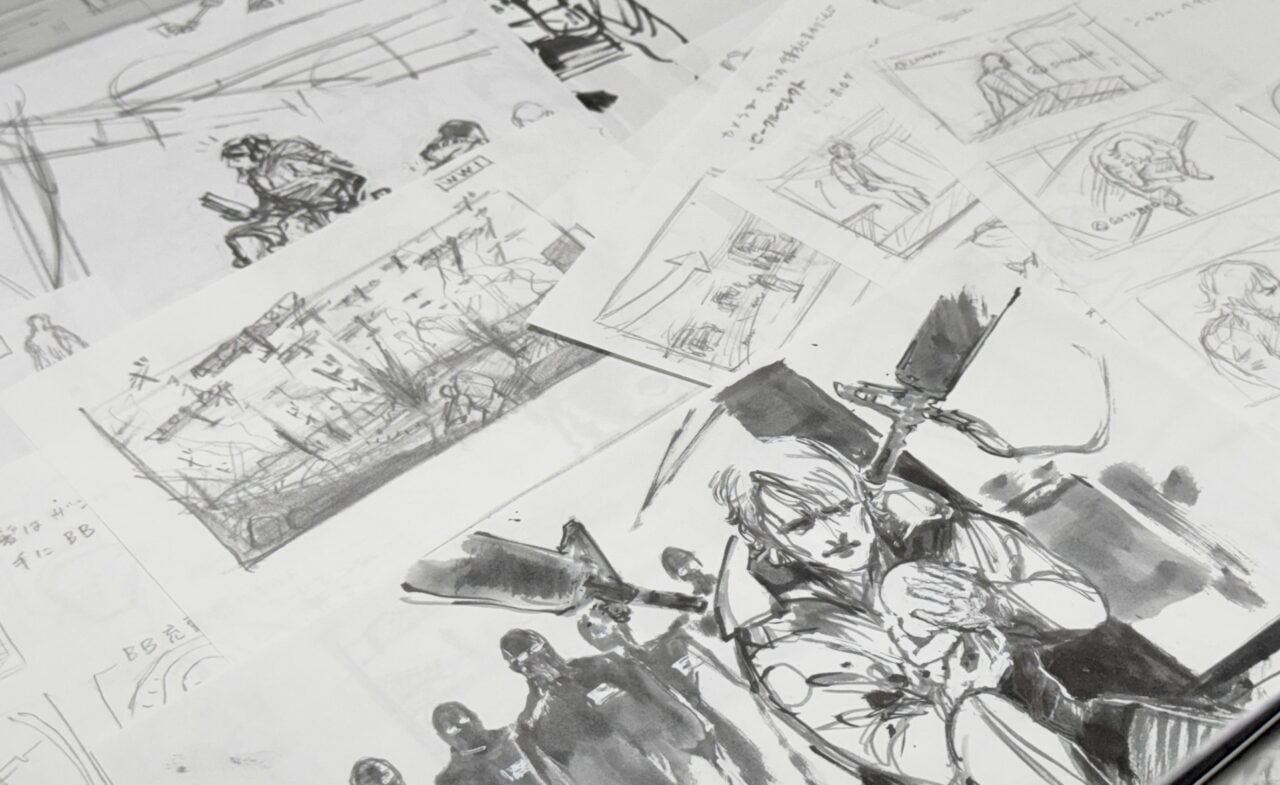
When Hideo Kojima rather suddenly left Konami in 2016 and, soon after, opened his own studio, the move sent shockwaves throughout the industry. Today, Kojima Productions has established itself as a AAA development studio within Japan known most of all for 3D-scanning celebrities and developing the Death Stranding franchise, which will soon move beyond gaming as it’s adapted into anime and a live-action film. Looking forward, the studio also plans to expand its range with Physint and OD: Knock in partnership with Xbox.
It’s one of the more fascinating stories from the last decade of the Japanese games industry, not just for how Kojima Productions came to be but for how it’s sustained itself as a studio. Kojima has leaned on his name recognition to turn the studio into a brand unto itself, and the director keeps himself and the studio in the spotlight through an array of film work, social media posts, radio shows, cameos in TV dramas, and more.
In the upmarket area of Azabudai in central Tokyo, with the historic Tokyo Tower landmark in view, an exhibition looking back on the past decade of the studio has opened for a limited time. Not just chronicling the public history of the studio, the event also featured new information and unseen concept art for Death Stranding, alongside details about the company’s in-development Xbox titles. After visiting the exhibition during its opening days earlier this week, here are ten things we learned about the studio and its array of upcoming titles.
When this exhibition was first announced, Kojima Productions promised not just a look back at the past 10 years of the studio, but a look forward at its in-development work on Physint and OD: Knock as well. That said, actual new information about Physint was light, perhaps as a result of the game’s turbulent summer which saw publishing shift from Sony to Xbox. All we could gather about work on that game came from some key concepts visible on a display copy of the game’s script.
Though behind glass, the hefty document made a few significant bits of information about Physint visible, providing our first hint about the setting of this new game. Notably, this game will take place within what the script calls “The Next Cold War.” This war is defined by three philosophies: HUMINT (“human intelligence”), SIGINT (“signals intelligence,” whatever that may entail, perhaps involving communication in some way), and OSINT (“open-source intelligence”). From this, it seems likely that the term PHYSINT refers to something along the lines of physical intelligence, but that’s still unconfirmed.
On the script’s cover, it appears that there’s a word that comes after Physint and has been redacted, suggesting we don’t yet know the game’s full, final title. We also saw some models of things that appear in-game, including a few mechs that look suspiciously like Metal Gear. Considering Kojima referred to the title as being in the same vein as his earlier stealth series, that’s not entirely unsurprising.
Kojima Productions has become more than a studio: it’s a brand. The merchandise featuring the studio’s logo and spacesuit-wearing Lumens character is proof of this. It appears that having a striking logo was a consideration from early on, as we got a rare look into the design process for the logo and mascot at the show. Notably, while the current logo features a skull inside a spacesuit and emphasizes the head of the character, many of the early designs featured the full character waving a flag. Another shows a knighted character that looks somewhat like Raiden from the Metal Gear series.
コジマプロダクション10周年記念展覧会の会場では、『デス・ストランディング』(デススト)のプロトタイプの映像展示も! その動画の一部を公開。
展覧会のリポートは以下の記事をチェック。https://t.co/59REcvXkZz pic.twitter.com/BFMISv9ZiE
While most of the exhibit allowed visitors to freely snap photos of all the concept art and design documents on display, photography was restricted on a short video containing footage of the original prototype for Death Stranding. Luckily, a