// SPACE.COM — SPAZIO & SCIENZA
On this day in space! Nov. 13, 1971: NASA's Mariner 9 becomes 1st spacecraft to orbit Mars, revealing close looks at the Martian surface
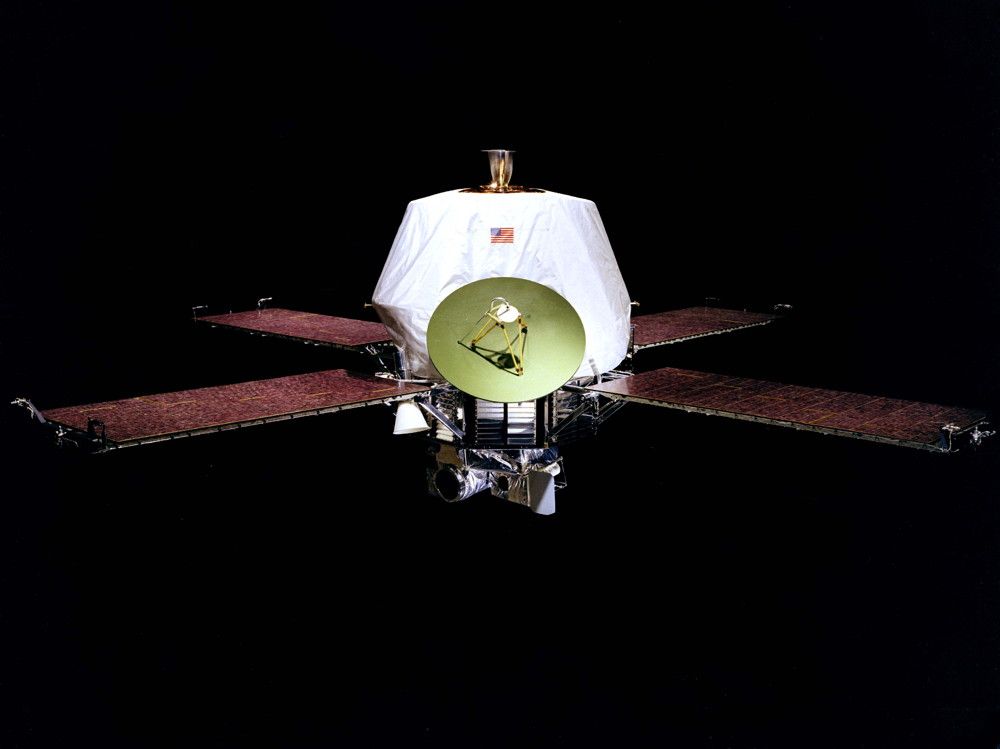
Mariner 9 cemented its place in space history when it entered into orbit around Mars, the first human-built spacecraft ever to do so.
When you purchase through links on our site, we may earn an affiliate commission. Here’s how it works.
On Nov. 13, 1971, Mariner 9 became the first spacecraft to orbit Mars. At the time, scientists didn't know much about the Red Planet.
NASA had several Mars flybys before Mariner 9. Those flybys showed that Mars had a cratered surface, so some scientists thought that Mars looked just like the moon. Then Mariner 9 blew blew their minds.
When Mariner 9 got to Mars, it arrived in the middle of a dust storm. It saw some tall structures sticking through the clouds. When the dust settled, images from Mariner 9 revealed that these structures were the tops of huge volcanoes.
One volcano, Olympus Mons, is the tallest in the solar system. Mariner 9 also spotted an enormous canyon called Valles Marineris. This canyon is five times longer than the Grand Canyon in Arizona.
Mariner 9 worked for one year in orbit. When it ran out of gas, NASA shut it off. But the spacecraft remains one of the most famous Mars voyagers of all time.
Mariner 9 cemented its place in space history when it entered into orbit around Mars, the first human-built spacecraft ever to do so.
The NASA spacecraft actually beat the Soviet Union's own Mars 2 spacecraft to the Red Planet, even though Mars 2 "had an 11-day head start," NASA said in a mission description. (Mars 2 would go on to be the first human-built craft to impact the surface of Mars when it crashed into the Red Planet.)
But it was the science from Mariner 9 that transformed Mars from a mysterious Red Planet into a full world for humans to explore.