// SPACE.COM — SPAZIO & SCIENZA
How sci‑fi imagines sports in microgravity, and how zero‑g sports might actually work
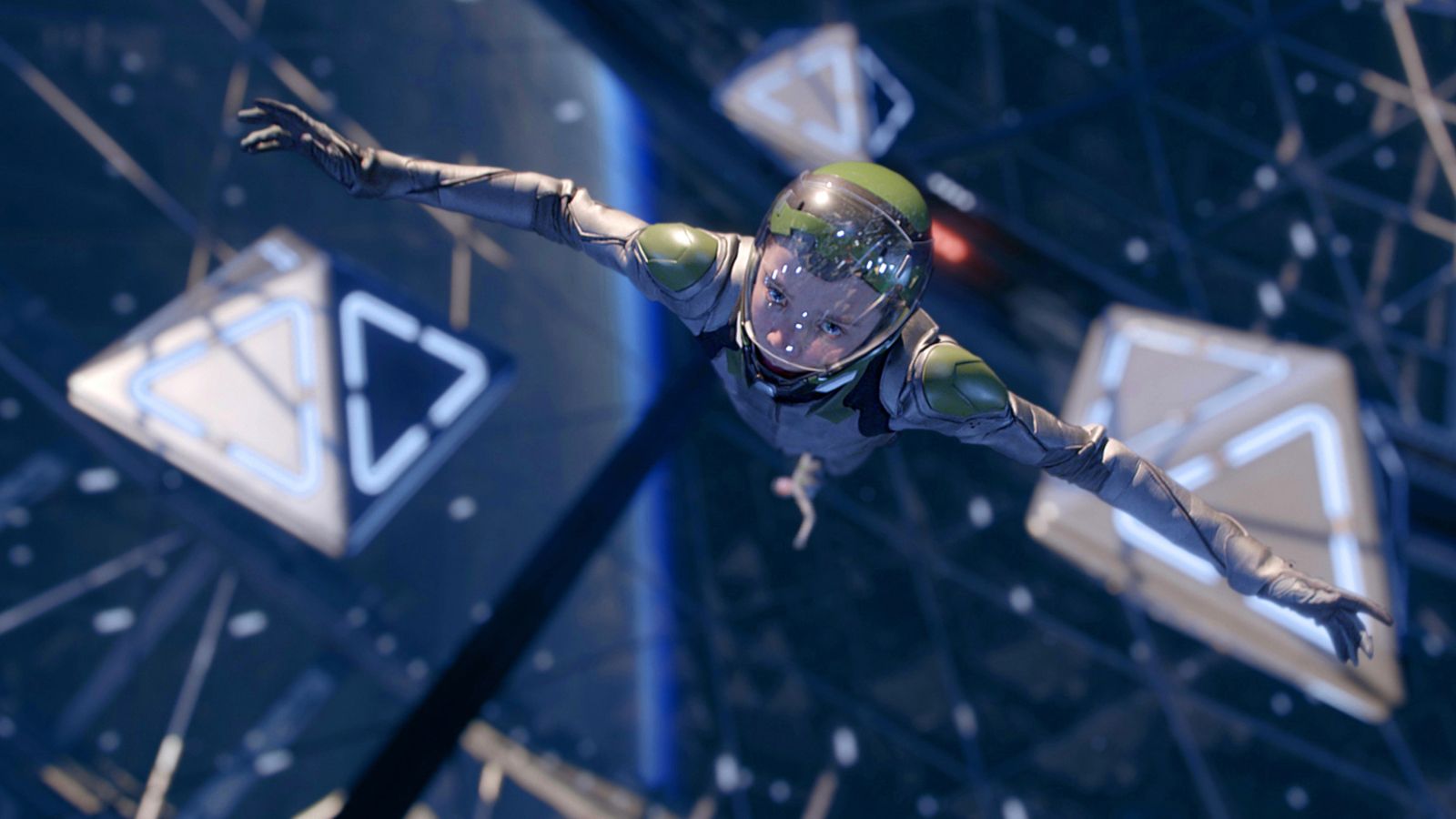
How realistic are the zero-g sports we see in sci-fi? We talk to Les Johnson, former Chief Technologist for NASA, to find out.
When you purchase through links on our site, we may earn an affiliate commission. Here’s how it works.
Sports in space have a long and proud tradition, whether it's Alan Shepard playing golf on the moon or the crew of the ISS hosting their own version of the Summer Olympics. The future looks bright as well, with the foundation of the Space Games Federation, the self-described "first governing and sanctioning body for competitive sports played in zero or micro-gravity," co-founded by a NASA astronaut.
Not to be outdone, science fiction has expanded the idea of zero-g and low-gravity sports to their logical extent, imagining everything from Doctor Who's zero-g squash to the advanced, gamified combat simulations of Ender's Game. There was even Space Jam's alien basketball game for the fate of the planet, though the gravity-defying antics there come from cartoon shenanigans rather than a zero-g playing field.
As humanity edges closer to colonizing our neighbors through projects like the Artemis Program and its ambition to establish habitats on the moon, our imaginations have to expand to encompass not only how we'll live in space but also how we'll play.
We rarely think about it in an Earth context, but every sport is heavily influenced by gravity. It defines how balls arc, how quickly players can move, and even how we orient ourselves in play spaces. Remove the gravity, and all of those assumptions and mechanics evaporate as well.
"First of all, in zero g, Isaac Newton will win every time," Les Johnson, former Chief Technologist for NASA, told Space. Les is a physicist with over 35 years of experience working at Marshall Space Flight Center in Huntsville, Alabama, as well as a science fiction author.
"'For every action, there is an equal and opposite reaction,'" quotes Johnson. "This is very difficult to simulate in real life due to gravity; special effects often try to compensate. With today’s AI and green screens, it can actually look good on screen."
In a microgravity scenario, the concept of up and down is no longer relevant. Suddenly, the playing field expands from a single, fixed plane to a fully three-dimensional space that includes height.
Momentum is also a completely different beast. Instead of being able to quickly stop and pivot the way you can during terrestrial sports, once you start moving in microgravity, you keep going until something stops you. It takes the trickiness of moving on ice in sports like hockey and increases it by several orders of magnitude.