// TOM'S HARDWARE US — HARDWARE & GADGET
Bambu Lab P3C Review: A more affordable tool changer
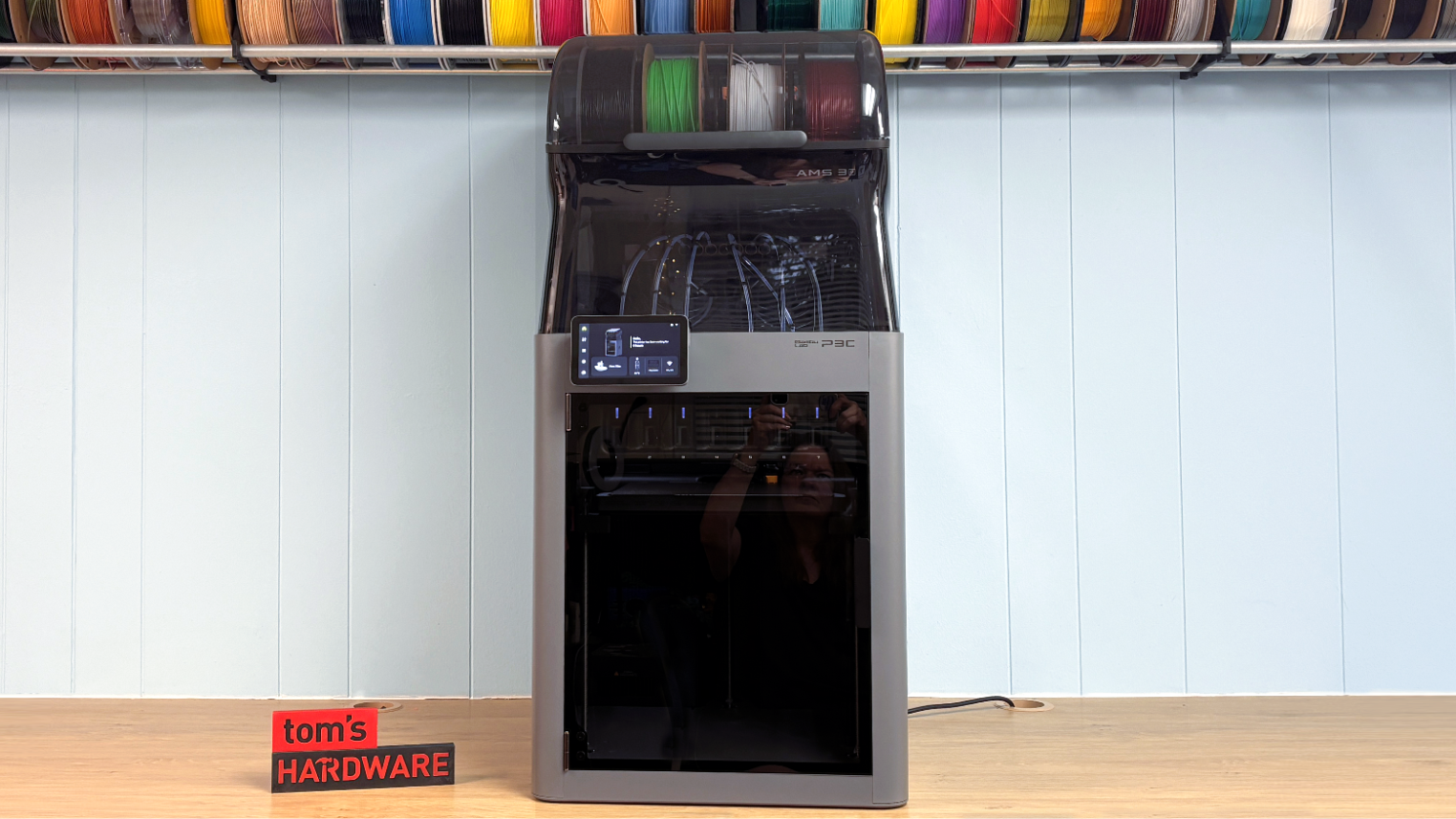
The Bambu Lab P3C is the lower-cost little brother of the H3C. It has the same type of tools and outstanding TPU printing process as its larger sibling, but drops the heated chamber, filament dryer, and automatic filament loading. If you want an upgradable tool changer on a more manageable budget, the P3C is a great place to start.
Works with multiple materials and nozzle sizes in the same print
Why you can trust Tom's Hardware
Our expert reviewers spend hours testing and comparing products and services so you can choose the best for you. Find out more about how we test.
Bambu Lab didn’t even tease the arrival of the new P3C, a smaller, more budget-friendly version of the H3C, which retails at roughly half the price. In fact, this post might be the first time you’ve heard more than just a rumor about the tool changer’s mysterious little brother.
The Bambu Lab P3C combo is a tool changer with room for seven tools and a 256 x 256 x 260mm build volume, roughly the same as the P2S. It ships as either a five-tool unit, with two empty slots for later customization, or as a seven-tool “multi-material combo” with six 1.75mm tools and one 2.85mm tool. Bambu is bringing back old school 2.85mm filament in the form of super squishy TPU 75A.
The five-tool unit is priced at $1,149, while the seven-tool is launching at $1,299.
It offers the same excellent TPU printing process for both standard and phat TPU and has quickly joined the select group of send it and forget it printers in my fleet. I’ve had very few failures, even when printing more technical filaments.
The P3C is not quite as tall as the H3C, but it does require almost 4ft (1,212 mm) of vertical space for the AMS lid to fully open. So plan accordingly and have a good space picked out in advance.
Bambu’s most annoying cost-saving measure took the A right out of AMS. There’s no motor of any sort in the AMS 3P, leaving you to manually load and unload the filament all the way to the nozzle. The process takes a long time if you are loading all of the filament slots. The upside of not having powered rollers is that the AMS 3P will run almost any 1kg or smaller spool without issue.
The printer can run different-sized nozzles from .2 mm to .8 mm, and has an optional 2.85 mm TPU filament tool. The FlexFeed extruder with Active Grip Control just pushes whatever filament it’s asked to while changing on the fly. It may be the best extruder I’ve reviewed, however, the printer as a whole is not quite what we need for the best 3D printers of 2026.