// ARS TECHNICA — SPAZIO & SCIENZA
Half of NASA's aging Mars fleet knocked offline by technical issues
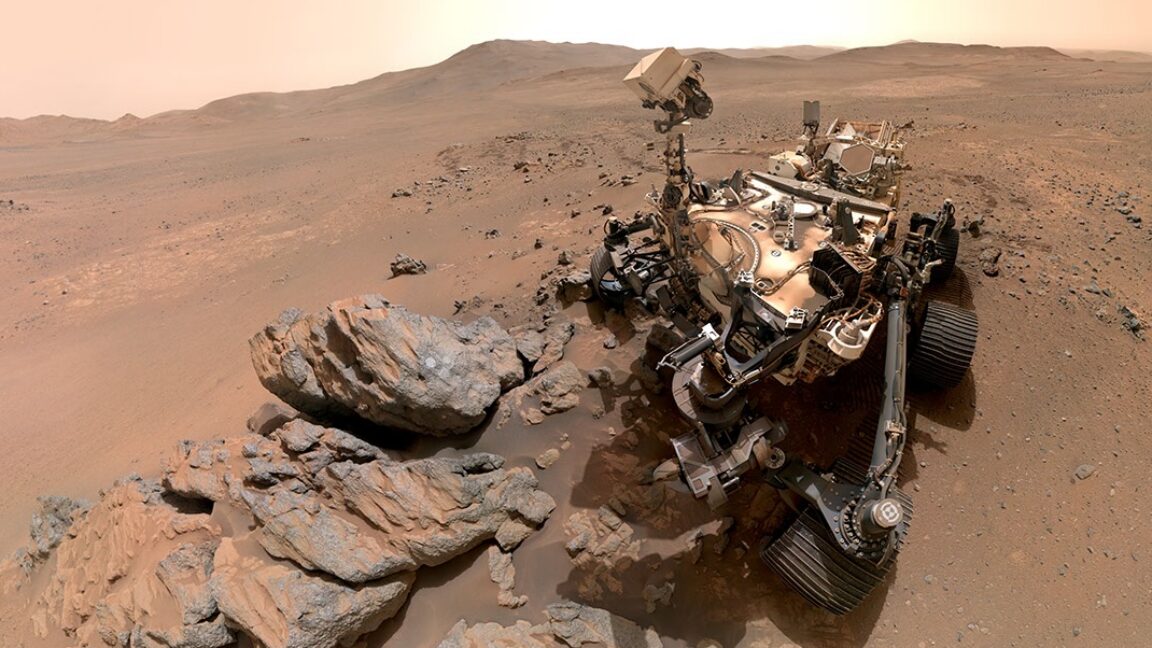
Perseverance is having trouble transmitting to Earth. Odyssey is rapidly burning through its waning fuel supply.
Two of NASA’s four missions operating at Mars have suspended science operations after encountering separate technical issues in recent weeks.
The missions affected by the outages—hopefully temporary—are NASA’s Perseverance rover and Odyssey orbiter. Both are operating beyond their original design lifetimes. Perseverance is in its sixth year exploring the surface of Mars, having collected rock and soil samples for eventual return to Earth. The rover is now studying the rim of a crater that once contained an ancient lake of liquid water. Odyssey arrived in orbit around Mars in 2001, and is the longest-lived Mars mission in history.
The problem on Perseverance stems from the rover’s communications system. The rover has two redundant UHF radios for high-rate communications with a fleet of orbiters that relay data to Earth. A separate X-band system is available for direct-to-Earth communications at a lower data rate.
One of the rover’s two UHF radios was unresponsive when it powered up on October 30, triggering an automatic switch to the backup radio and placing the rover in safe mode. Ground teams at NASA’s Jet Propulsion Laboratory in California later discovered the backup UHF radio was transmitting at about half of its expected power output, NASA said in a statement last week.
“The team has stopped using both radios until they can evaluate potential causes of the issues and one or both are deemed safe to resume operating,” NASA said.
Perseverance is now transmitting signals directly to Earth in X-band, but the connection provides a “significantly lower data rate” than relaying signals through orbiters using the UHF radios. Mission managers paused the rover’s science operations “out of an abundance of caution” as they investigate the radio problem. Their initial focus is on getting the backup UHF radio running before turning their attention on recovering the primary radio, NASA said.
“The team is hopeful the rover could return to science by the end of November.”
The six-wheeled robot broke a record last month for the farthest any vehicle has driven on another planet. The Perseverance rover surpassed the 28.06-mile (45.16-kilometer) mark set by NASA’s Opportunity rover, which stopped working in 2018. Perseverance’s odometer now sits at twice the rover’s original goal for distance traveled.
The situation with the Odyssey orbiter seems more dire. One of the four reaction wheels used for pointing the spacecraft stopped spinning in early November, leaving Odyssey with two good wheels after the first one failed in 2013. The orbiter needs at least three wheels to keep it oriented correctly.