// SPACE.COM — SPAZIO & SCIENZA
This Sky-Watcher is an ideal beginner telescope for solar observing
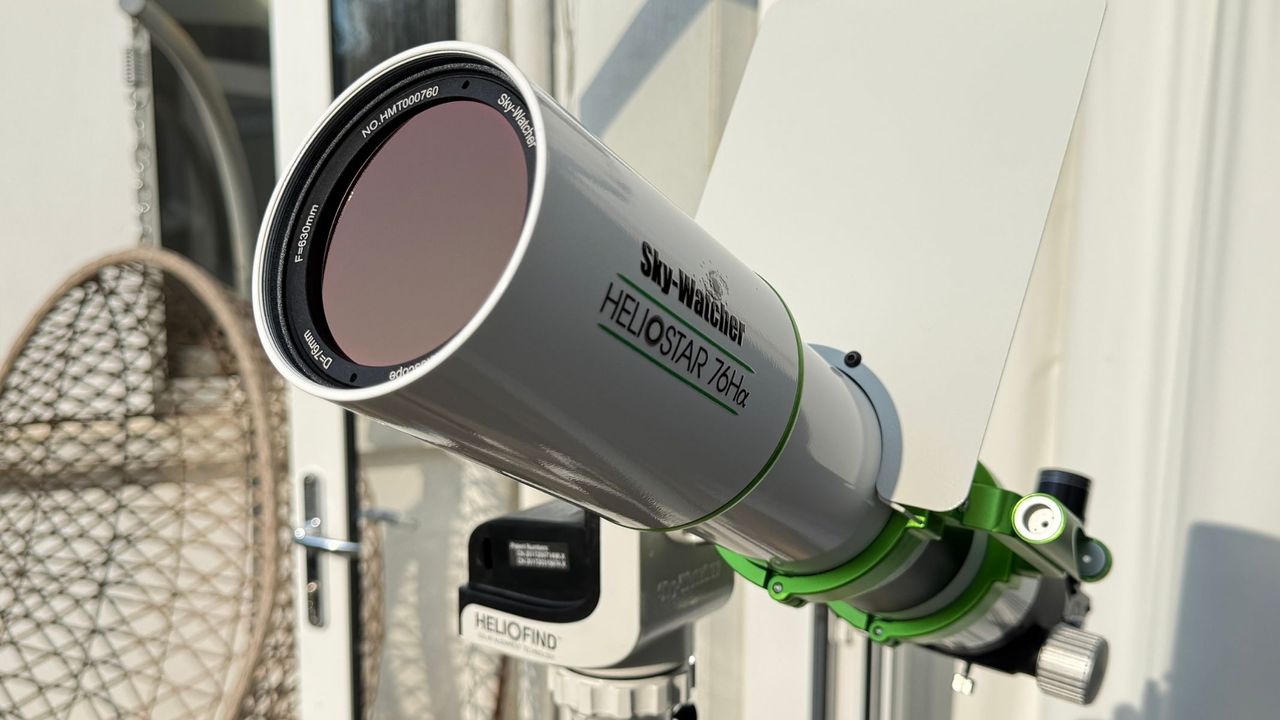
If you’ve never seen the sun in Hydrogen-alpha (Hα), you’ll be blown away by views of solar activity through the Sky-Watcher Heliostar 76mm, a highly capable, easy-to-use solar telescope that makes serious solar observing simple for beginners. It's an all-in-one setup, though you’ll likely want to add a solar or equatorial mount, plus a planetary camera, for the full experience. As the core of an astrophotography rig, it’s not perfect, but visual observers will love it.
Why you can trust Space.com
Our expert reviewers spend hours testing and comparing products and services so you can choose the best for you. Find out more about how we test and review products.
Optical design: Achromatic doublet dedicated H-alpha refractor
Filter type: Hydrogen-alpha, 656.28nm (meets ISO 12312-2)
Etalon: Sky-Watcher Solis etalon technology (<0.5 Å bandwidth)
Blocking filter: 11.5mm blocking filter integrated into supplied diagonal
Tuning system: Mechanical Trifid/Triffid pressure tuner
Mount: OTA supplied with tube rings and V-style dovetail
Other accessories: smartphone adapter, sunshade, hard case.
With a total solar eclipse on Aug. 12, an annular solar eclipse on Feb 6, 2027 and another total solar eclipse on Aug. 2, 2027, solar telescopes are about to be in hot demand. After all, why peer at the eclipsed sun when you can see it in close-up? However, the Sky-Watcher Heliostar 76mm offers something a little different to a telescope wearing a solar filter — and it’s just as good when there’s no eclipse at all. Built around a standard, small-aperture refracting telescope, it has an H-alpha etalon (an ultra-narrowband filter used to observe the sun) and a diagonal blocking filter, which together let you safely see features in the sun’s chromosphere, a layer of its atmosphere above the surface (photosphere) and below its corona (outer atmosphere). It’s a layer that’s invisible in standard white light, but it glows in the very specific 656.28 nm wavelength of light, called hydrogen alpha (about 92% of all the atoms in the sun are hydrogen).