// SPACE.COM — SPAZIO & SCIENZA
When a total solar eclipse darkens the sky on Aug. 12, these citizen scientists will be watching
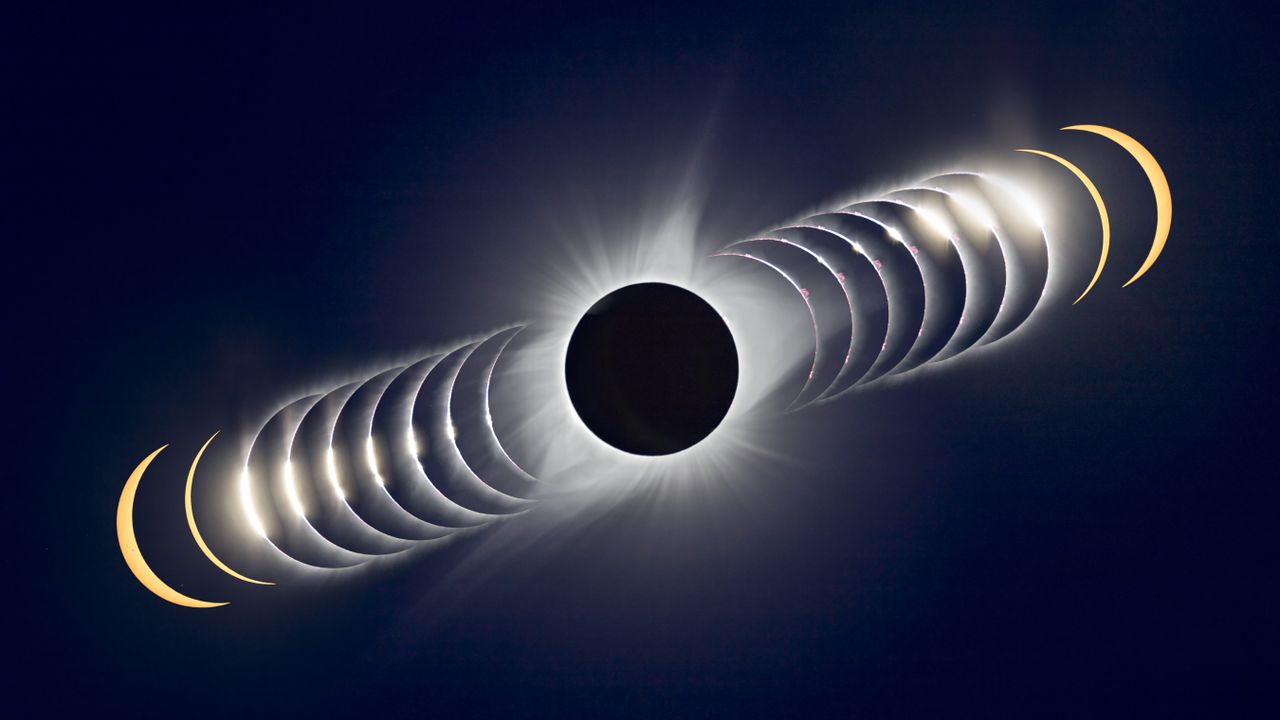
Meet the citizen scientist initiative bringing you closer to totality.
When you purchase through links on our site, we may earn an affiliate commission. Here’s how it works.
Meet the Dynamic Eclipse Broadcast Initiative — a passion-driven citizen science endeavour that shares breathtaking views of total solar eclipses while capturing valuable data on the sun's incandescent atmosphere.
At the heart of our solar system is a burning ball of superheated gas 100 times the width of Earth, with a thermonuclear reaction raging at its core. Its radiation and gravity hold the planets in their orbit and allow for the existence of life on our Blue Marble.
Yet despite centuries of scientific scrutiny, many mysteries remain as to the inner workings of our sun and the influence it extends out into the solar system.
One effort to unravel the mysteries and share the beauty of our parent star is being undertaken by the DEB. A network of volunteer solar observers coordinated and guided by professional astronomers from Southern Illinois University Carbondale that's partly funded by NASA and the National Science Foundation.
"We came up with a setup that's portable, that's relatively cheap," Associate Scientist Bob Baer of the Southern Illinois University Carbondale and co-principle investigator of the DEB Initiative explained to Space.com in an interview. "They're about $1,800 once you factor in everything, like the computer, the mount, the telescope, the camera."
During the great American Eclipse of 2024, the DEB had over 80 teams equipped with identical telescopes arrayed across a path of totality that cut through the contiguous United States. Having trained for months, their duty was to keep vigil on the climactic phase of totality, as the moon's silhouette covered the face of our parent star to reveal the sun's golden corona reaching out into the false twilight.
Telescope footage was uploaded in near-real time and included in livestreams that brought the beauty of the eclipse directly to the public no matter where they were — an impressive effort that saw numerous members of the team receive Emmy Awards for their coverage.
Some of the volunteers are also the authors of a scientific paper set to be published in the Astrophysical Journal Letters that tracked the structure and dynamics of the sun's inner atmosphere, or corona, from 11 DEB locations over 49 minutes of evolution.