// BBC UK NEWS — CRONACA
'I felt Tourette's would ruin my life, now I teach at Cambridge'
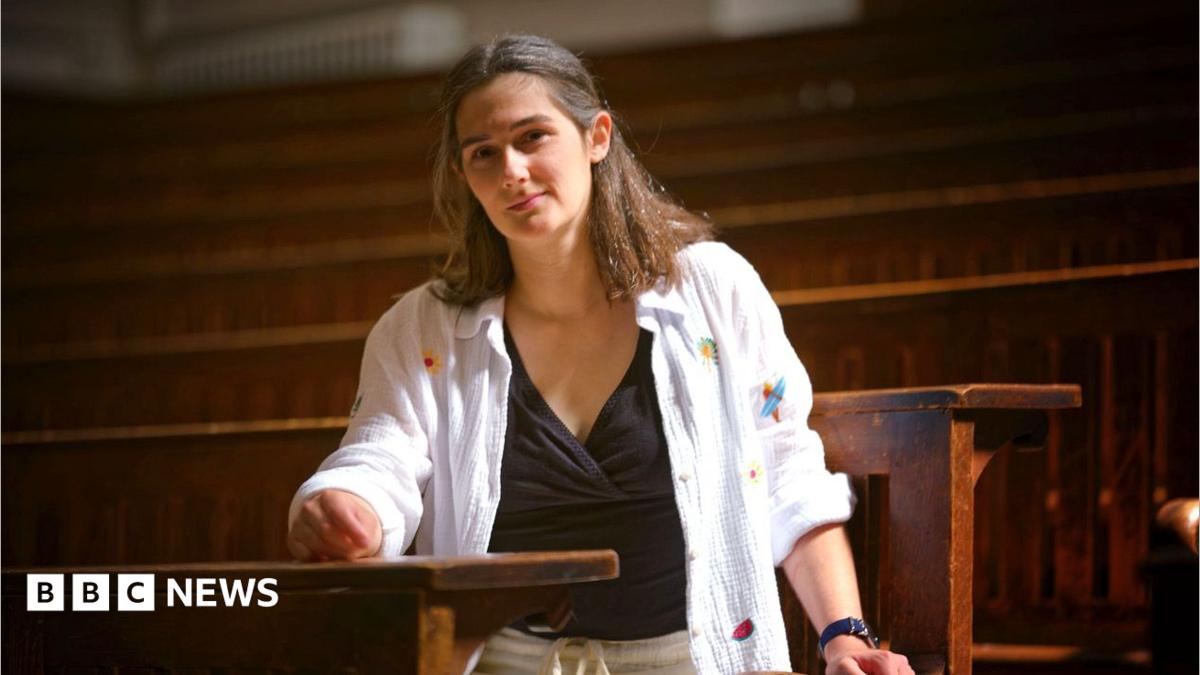
Throughout her academic life, Dr Amanda Cole has kept her Tourette's hidden - until now
Dr Amanda Cole was 15 and sitting in a religious studies class when she experienced a peculiar spasm at the back of throat. She assumed it would pass, but it was a vocal tic and her first known manifestation of her Tourette's syndrome, a condition that causes people to make sudden, repetitive sounds or movements.
"How am I going to have a family? How am I going to have a job?" Cole, 32, remembers asking herself as she lay awake at night after her diagnosis in her 20s at her home on the Debden Estate near Loughton, Essex. "I thought it was going to destroy my life."
Now a married mother-of-one, Cole is an assistant professor in sociolinguistics at Cambridge University, but throughout her academic life she has kept her Tourette's hidden - until now.
Following an incident at this year's Bafta Film Awards ceremony in which a guest shouted out offensive words because of his tics, Cole said she wanted to be open about her condition and allowed the BBC to join her as she began telling colleagues and students.
When growing up, Cole did not tell friends or classmates about her Tourette's
"I felt so scared of Tourette's," says Cole, who is one of about 300,000 people in the UK living with the condition. "There was no-one I knew that had Tourette's, and I didn't see anyone in the public eye that had Tourette's - and if they did, they were a figure of ridicule.
"The only impression I had of Tourette's was people acting... and they were swearing, and they were shouting, and they were being obnoxious."
As a result, she hid the condition from friends growing up and colleagues by either by suppressing the tics or releasing them when the person she was speaking with looked away.
Even now, Cole says she retains "some residual shame" about her condition and wants to live in a world where people can "tic freely" without embarrassment.