// HACKER NEWS — CYBERSECURITY
The “mechanical miracle” that ruined Mark Twain’s life
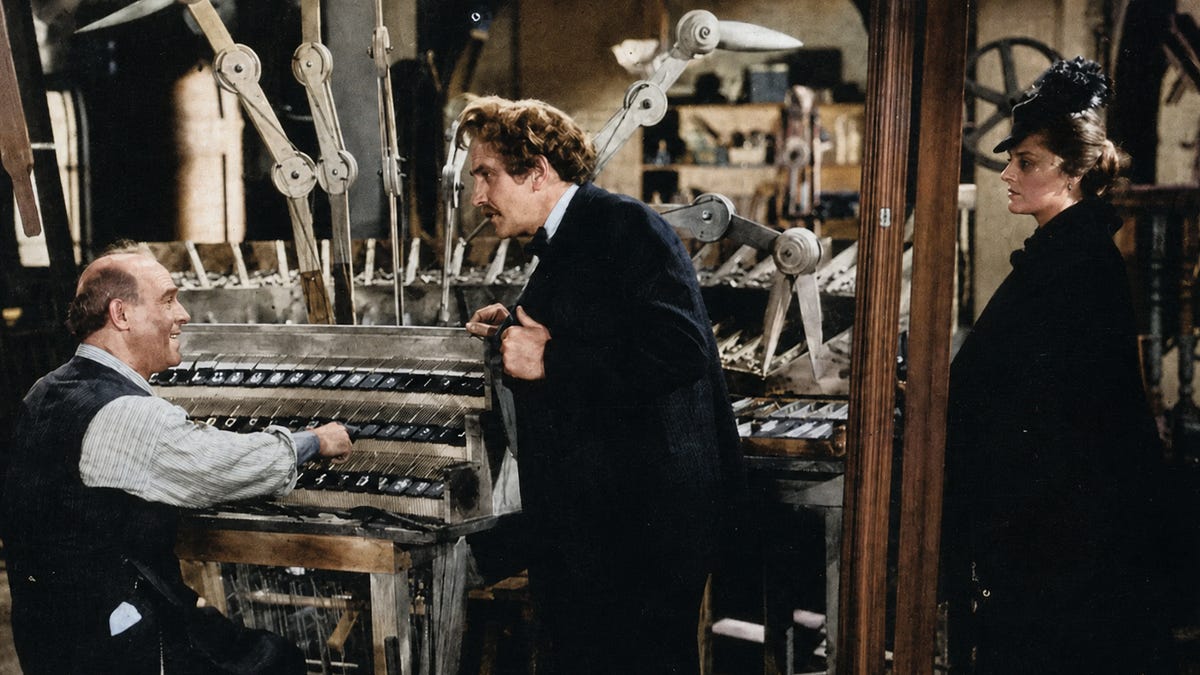
“All the other wonderful inventions of the human brain sink pretty nearly into commonplaces contrasted with this awful mechanical miracle.”
Such was Mark Twain’s verdict on the Paige Compositor, a typesetting device which was among the most complex machines ever built up to that point in history. It was also a ruinous disaster for everyone involved — despite being a good idea.
Twain came to see Paige’s machine as an “immense historical birth”: the point of origin for new mechanical lifeforms that would someday mimic the human mind. In a 1889 letter to his invention-mad brother Orion, Twain called the Paige machine “a cunning devil, knowing more than any man that ever lived” and claimed it would make “telephones, locomotives,” even “Babbage calculators” seem like “mere toys, simplicities!”
The verdict of Twain’s biographers is that the author’s decade-long quest to automate the printing industry basically destroyed his life. One calls the Paige machine “a remorseless Frankenstein monster.” Twain’s most recent biographer, Ron Chernow, labels his obsession “a full-blown monomania,” and I find it hard to argue otherwise.
Reading Chernow’s biography, I was shocked at the degree to which “the Machine” took over the life of Twain’s family during his prime creative years following Huck Finn, and the extent to which its failure was responsible for both his financial ruin and subsequent depression.
It began in 1880, when Twain met a “little bright-eyed, alert, smartly dressed inventor” named James W. Paige. Twain had once been a “printer’s devil” himself, and although he was initially skeptical Paige’s new machine would automate away much of the costly human labor involved in setting the metal type of books and periodicals, he soon became a convert. The machine, Twain concluded, was not just a mechanical wonder but a surefire path to riches: “I never saw such an inspired bugger of a machine. Anybody can set type with it... I reckon it will take about a hundred thousand machines to supply the world, and I judge the world has got to buy them.” The financial advantages of a machine that “does not get drunk” and “does not join the printer’s union” were simply too vast for anyone to ignore.
As you can probably guess, Paige was not quite the towering hero-inventor that Twain believed him to be. He was clearly a person of real ability, but his main talent appeared to have been his skill at raising money by promising the impossible — the 19th century version of Steve Job’s reality distortion field. (“When he is present I always believe him — I cannot help it,” Twain admitted. “When he is gone away all the belief evaporates. He is a most daring and majestic liar.”)1
Twain ultimately invested the equivalent of roughly ten million dollars toward the machine: not just the bulk of his earnings from his books, but also of his wife’s inherited fortune, all of which he lost.
The issue was complexity. According to his long-suffering patent attorney, Paige “became lost in the wilderness of appalling details” as his device grew to over 18,000 distinct parts. Paige’s patent application was known internally at the United States Patent Office as “The Whale.” It took patent examiners a full 30 days just to read the initial application (you can try it yourself here).
When, at last, they requested a functioning machine, none could be found.