// ARS TECHNICA — INTELLIGENZA ARTIFICIALE
Booksellers suspect AI firms are buying and then destroying rare books
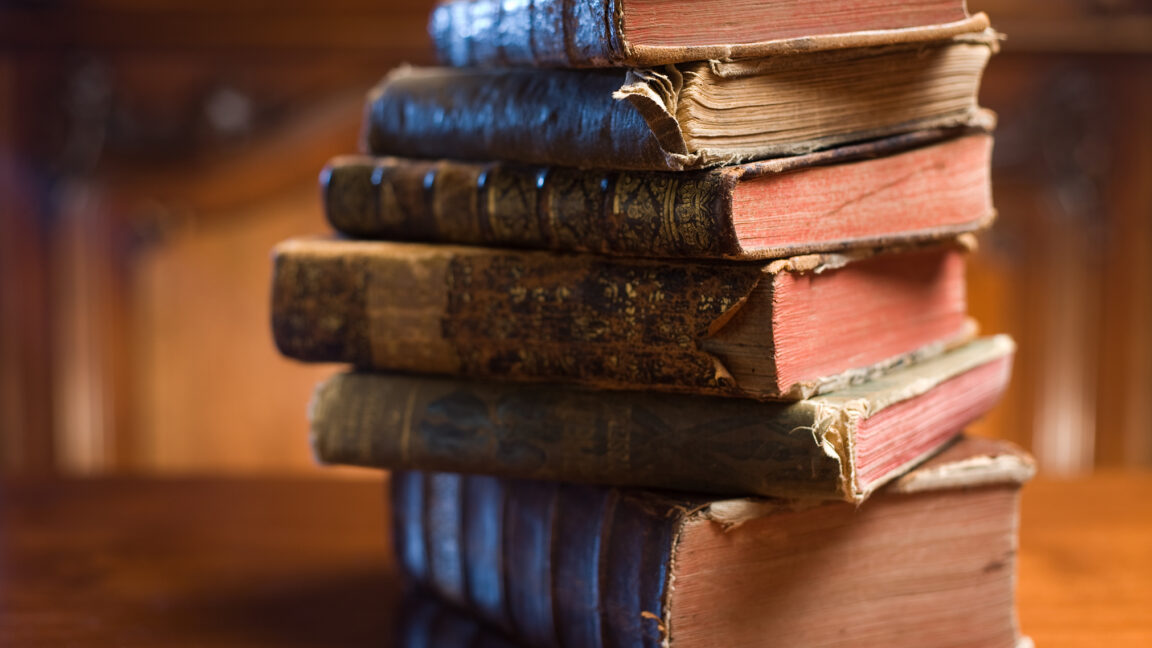
AI firms quietly bulk buying rare books face resistance from booksellers.
If you can truly appreciate an old book—and maybe even marvel at how its fragile, yellowing pages contain some of the earliest ways that people tried to make sense of the world around them—then headlines about tech companies that are destroying books to train AI likely torture a tender part of your soul.
It’s indeed depressing to imagine piles of book spines waiting to be fed into wood chippers while torn-out pages are cropped, scanned, and trashed. But that’s the cheapest and easiest way to scan books as fast as possible, and AI companies are in a race to advance their models by training on the kind of engaging, high-quality long-form texts that can only be found in books. So book lovers fear it’s likely that the practice is happening on a grander scale than is currently being reported and that some physical copies of books will be lost forever.
What makes this destruction extra painful, though, is that it doesn’t have to be this way.
Google patented a non-destructive book-scanning technology in 2009 that AI firms could use to efficiently scan books—if they were willing to slow down and invest in the process. It’s not perfect, however; studies have found that the curve of the page can distort text, and pages can be missed. As Wired reported, glitches can happen when workers move too quickly, including disembodied hands obscuring pages.
Overall, the trade-offs in cost and speed may not appeal to AI firms looking for the cheapest way to scan millions of titles, and Google’s method may not be the best way to handle rare books anyway. The Internet Archive, which helps libraries preserve aging collections, has long understood that scanning old texts takes time and attention to limit handling, and that’s why it’s considered such a human job.
For AI companies bent on finding shortcuts, the Internet Archive’s method may feel almost alien.
But if you’re a book lover looking for a balm while parsing rumors of AI-driven book destruction, an old post from 2021 describes how the Internet Archive scans books to avoid damaging even the most precious rare books. In it, a book scanner who has been with the Archive since 2010, Eliza Zhang, offered a moment of zen by explaining what she likes so much about scanning books “the hard way.”
The Internet Archive did try going the automated route, the post said, even testing out “commercial book scanners that feature a vacuum-powered page-turning arm.” But “it turns out those automated scanners didn’t really work well for brittle books, rare volumes, and other special collections—the kinds of material our library partners ask us to digitize,” the Internet Archive said.
“The job requires keen concentration,” Zhang said, since the pages of “very old, fragile books” are “paper thin.” In the post, Andrea Mills, who helps lead the Archive’s book-scanning operations, explained that “clean, dry human hands are the best way to turn pages.”