// HACKER NEWS — CYBERSECURITY
The Library of Ashurbanipal
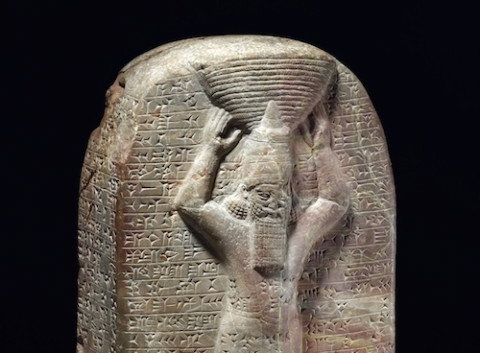
When it was discovered in the 19th century, the Library of Ashurbanipal revealed an ancient Assyrian empire previously known only through myth.
Before the Library of Alexandria there was the Library of Ashurbanipal – an Assyrian king who collected the knowledge of ancient Mesopotamia under one roof. This incredible library was forgotten for millennia, and remains largely unknown even today. Yet it contained an abundance of texts that were influential across the ancient world, and bequeathed a debt to modernity that is rarely acknowledged.
Ashurbanipal assembled his library at Nineveh in the seventh century BC. Today known as Mosul in Iraq, Nineveh was then the most splendid – and largest – city on Earth, and the seat of the Neo-Assyrian empire that spanned from Turkey in the west to Iran in the east. Although it is the Persians who are usually credited with constructing the first world empire, they built on foundations laid by the Assyrians, taking over their system of provinces, network of roads, and imperial ideology.
Ashurbanipal, the empire’s penultimate king, ruled from 669 to 631 BC. He expanded the empire to its greatest extent by waging campaigns in all four directions. But although he portrayed himself as a formidable military leader, he had been trained as a scholar and, as the youngest son of his father Esarhaddon, was probably never meant to be king. As Ashurbanipal tells us in his ‘biography’ – one of his inscriptions that talks about his preparation for kingship and ascension to the throne – he was educated to the same level as his advisers, and could hold his own in a debate with them:
I learned the craft of the sage Adapa, the secret [and] hidden lore of all the scribal arts. I am able to recognise celestial and terrestrial omens … I can resolve complex [mathematical] divisions [and] multiplications ... I have read cunningly written texts in obscure Sumerian [and] Akkadian that are difficult to interpret. I have carefully examined inscriptions on stone from before the Deluge that are sealed, stopped up, [and] confused.
Ashurbanipal laid claim to knowledge as well as territory. He collected tablets recording ancient traditions stretching back more than a thousand years, as well as keeping the library up to date with the latest research, on topics spanning everything from religion and literature to magic and medicine. As such the library is a window not only into ancient Assyria but also the even more remote past.
Unlike the Library of Alexandria, Ashurbanipal’s library is not lost to history but sits on storage shelves at the British Museum. The ancient Mesopotamians wrote on clay tablets, a durable material that does not decay in the ground, nor is destroyed by fire. When Ashurbanipal’s library burned down in 612 BC, during the sacking of Nineveh by the Babylonians, the conflagration baked the tablets like a giant kiln, hardening the clay and thus preserving them. Consequently, 33,000 of its tablets have survived – so many that academics are still dealing with the backlog, deciphering tablets that were first discovered more than 150 years ago. Other tablets have turned up from all over Mesopotamia, and it is estimated that the number of written sources from the region stands at half a million. And all the while, new discoveries are continually being made as excavations resume in Iraq. There are simply too few historians trained to read them to be able to cope with the supply.
Ancient Mesopotamia covered the area of modern-day Iraq. Mesopotamia is Greek, meaning ‘between the rivers’, referring to the Tigris and Euphrates. Many different peoples are known to have lived here over the centuries, beginning with the Sumerians (approximately 3500-2000 BC), followed by the Akkadians, the Assyrians, and the Babylonians. The region was a melting pot of different peoples but nevertheless was loosely held together by a shared literary and religious tradition, expressed, first and foremost, in the use of cuneiform wr