// TOM'S HARDWARE US — HARDWARE & GADGET
Just one instruction on AMD's 2015-era CPUs cracks open secret memory areas and gives full hardware-level control — exploit for 15h and 16h chip families gets you access to Platform Security Processor, microcode, and System Management Interface
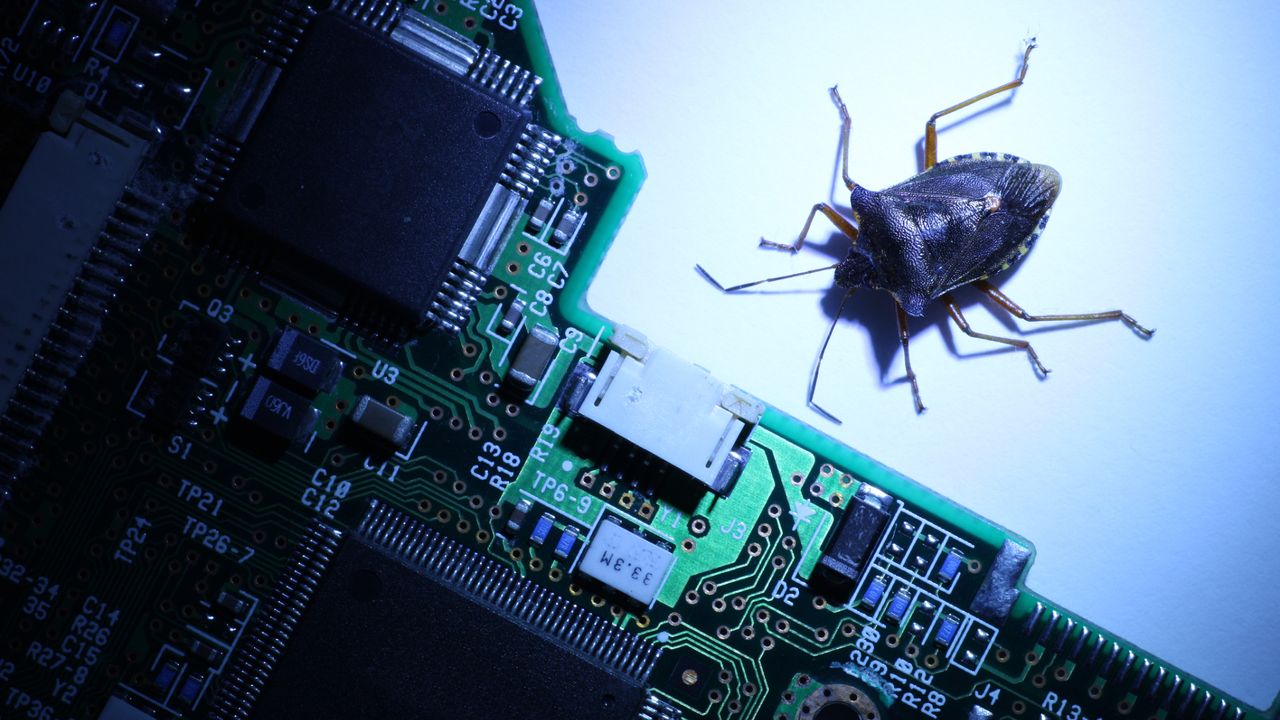
Not a very practical exploit, but an exceedingly interesting one.
When you purchase through links on our site, we may earn an affiliate commission. Here’s how it works.
Many cybersecurity exploits have been deemed The One Ring To Rule Them All, but that moniker is rarely as true as a literal bit that disables the memory mapping on some AMD CPUs, granting access to normally inaccessible areas. With just one instruction, you can access off-limits software like Platform Security Processor (PSP) where the fTPM runs, the System Management Mode (SMM), microcode patch RAM, and other various sundries — in other words, full hardware-level control.
The exploit is called Skitter Creek Bath Salts (Skitter), and was developed by prolific hacker Christopher Domas, famous for finding CPU flaws like Sandsifter and God Mode Unlocked. Only AMD chips from the 15h and 16h families are affected, roughly 2011 to 2015 vintages. Family 15 is FX-series desktop chips and some Opterons, while 16h includes low-power Jaguar- and Puma-based SoCs like those in the PlayStation 4 and Xbox One, plus a handful of Athlon, Sempron, and Opteron-X chips, among others.
To pull off this exploit, you'll need kernel-level access, meaning the ability to run your own drivers. But once you do, the entirety of DRAM is your oyster. AMD published a security bulletin on the matter, saying these chips are out of security support, plus, as mentioned, the necessary access level means an attacker already controls the machine anyway.
If you're confused as to how one instruction opens up a system, here's our attempt at a simplification. Say you have 16 GB of RAM. You'd think that Windows gets all 16 GB to play with, from address 0 to the end of memory — but as you may have noticed before, it's actually a bit less than that. The rest is reserved for system-level data.
Some parts are visible to the OS so it can interact with devices, but others include Very Important Things like PSP, SMM, microcode patches, all in sections supposed to be completely untouchable. If they were accessible, the system as a whole wasn't secure by definition anymore — just think of a malicious driver being able to freely mess with how your processor handles data.
For performance reasons, modern processors' RAM controllers don't use memory in a straight line, so to speak — they use bank interleaving, meaning that the actual bytes in the DRAM are jumbled, all while the OS sees a nice, tidy, flat surface. As it turns out, the CPU setting that controls this feature is accessible to the OS in the aforementioned chip families, and it's called BankSwizzleMode (Swizzle). It can be toggled on or off with the instruction "xor dword [0xf80c2094], 0x00400000", a simple bit twiddle. And as it turns out, this can be exploited.
First, you run a loop to figure out how the mapping normally functions. You place a canary value in memory (say, 0xDEADBEEF, according to tradition), disable Swizzle, run through memory to see where it landed, and reenable Swizzle again. Do this enough times, and you know exactly how visible memory is mapped into physical DRAM, and vice-versa.
Get Tom's Hardware's best news and in-depth reviews, straight to your inbox.