// NASA BREAKING NEWS — SPAZIO & SCIENZA
Human-Related Microbes May Survive Moon’s South Pole, NASA Finds
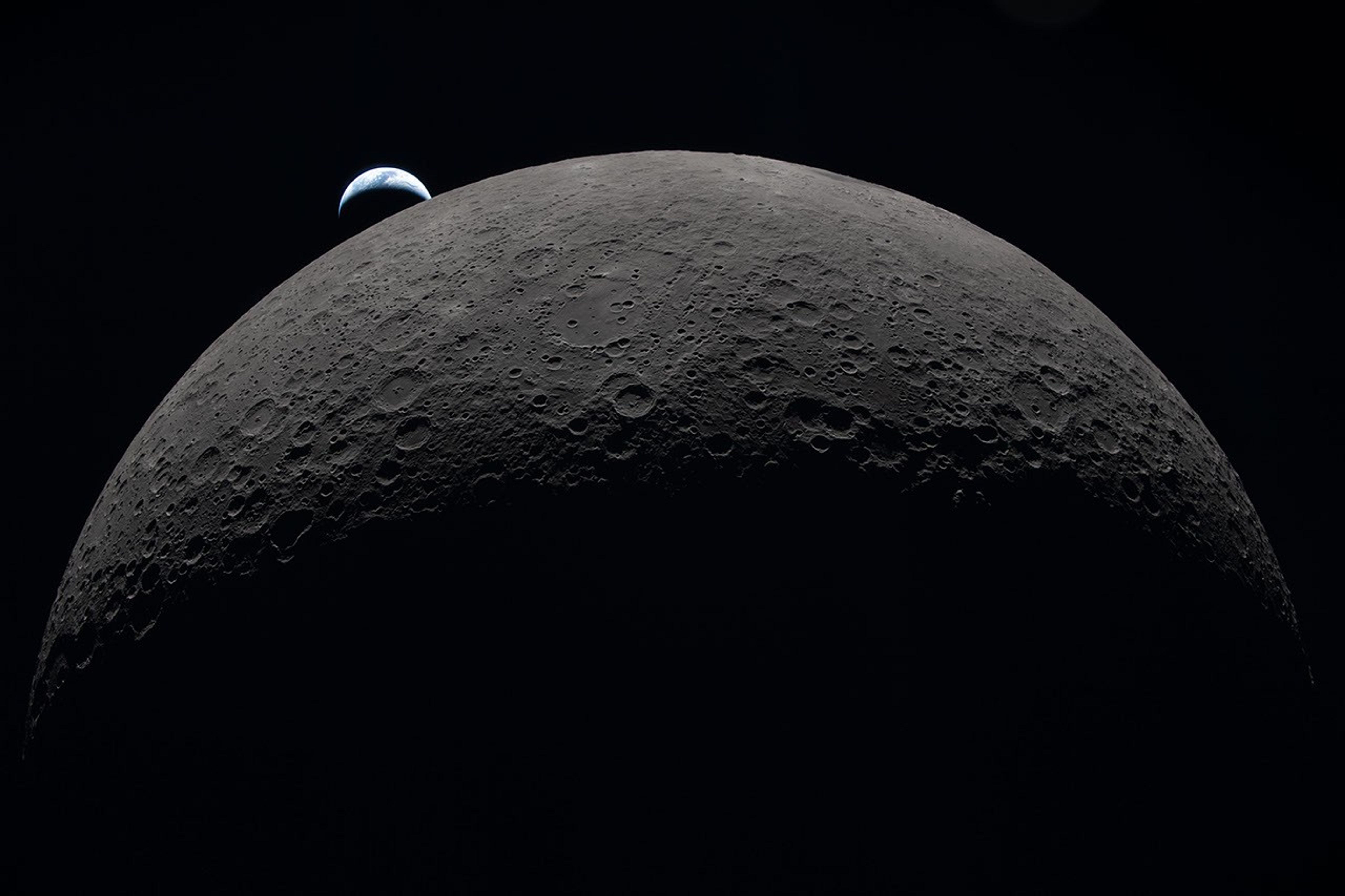
Some of Earth’s microbes likely to hitch a ride to space with human explorers could survive in the shaded nooks and crannies of the Moon’s South Pole region, NASA scientists say.
Published on Aug. 19, 2026, in Science Advances, these findings highlight a need to better understand microbial persistence in extreme lunar environments. As humans build a permanent presence on the Moon, it may become difficult to distinguish ancient lunar chemistry from contamination delivered by visiting astronauts. The concern extends beyond the Moon and on to Mars, scientists say.
“Humans are natural explorers, and with them come their voices, their memories … and their microbes,” said Prabal Saxena, a planetary scientist who led the study from NASA’s Goddard Space Flight Center in Greenbelt, Maryland. “For some scientists, myself included, that reality can be unsettling. But it also creates an opportunity to turn an imperfect situation into a useful experiment.”
Bringing microbes along is unavoidable: Humans have, on average, 1 million bacteria living on each patch of skin the size of a pencil eraser, for example. These bacteria vent from spacesuits and habitats. Though the paper’s authors worry about contamination interfering with the search for chemical clues to ancient geology or biology, they also argue that the Moon should be used as a natural lab. In shaded areas around the South Pole, scientists could carefully test the real-life limits of microbial survival in an environment that can’t easily be reproduced on Earth.
Before any surface science can happen, scientists need a baseline measurement of what contaminants humans bring, the authors say.
“We need to understand what was there before us, because when we go to Mars to search for signs of life beyond our planet, we will want to make sure it’s not stuff we brought,” said Andrew Needham, a NASA Goddard-based paper co-author who is an Artemis contamination‑control scientist for lunar samples.
Even with strict sterilization procedures, some organisms are stubbornly resilient. A good example is Aspergillus niger, which is a fungus that thrives in warm, damp places like household bathrooms and heating, ventilation, and air conditioning systems. Astronauts have sampled it inside the International Space Station, and experiments demonstrate that the fungus can survive outside the station as well. Aspergillus niger was one of five microbes, including bacteria and fungi, selected for this study because of its known toughness in spaceflight environments.
That microbes survived on the space station’s exterior surprised scientists. These species are typically not considered “extremophiles” that can withstand harsh conditions, such as the vacuum of space, according to Aaron Regberg, a geomicrobiologist at NASA’s Johnson Space Center in Houston.
“I would have expected these microbes to have dried out,” said Regberg, who studies space station bacteria and was a co-author on the paper.
He pointed out that NASA often bakes robotic spacecraft at temperatures above 400 degrees Fahrenheit to reduce the number of living organisms on them. But that’s not possible with astronauts, so contamination concerns take on new meaning in crewed exploration of the Moon’s south polar environment.