// SPACE.COM — SPAZIO & SCIENZA
Launching 10,000 tiny 'femtosats' to Saturn? NASA funds 18 futuristic spaceflight ideas
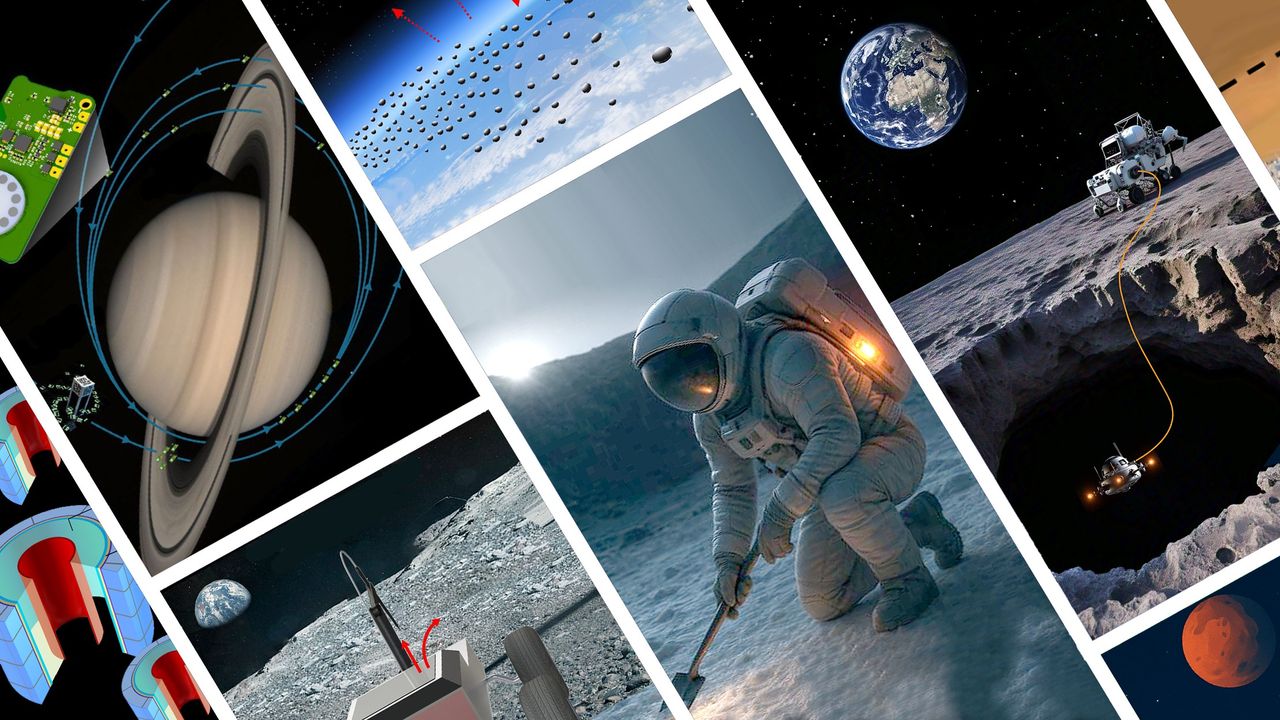
Throwing 10,000 tiny spacecraft at Saturn's rings is just one of the out-there ideas NASA wants to know more about.
When you purchase through links on our site, we may earn an affiliate commission. Here’s how it works.
NASA is giving a financial boost to nearly 20 technology investigations to help fuel the incubation of tomorrow's spaceflight research capabilities.
The NASA Innovative Advanced Concepts (NIAC) program has selected 18 projects for this year's Phase I awards, which will each split a total of $3.2 million in development funding. NIAC is designed to bolster technology breakthroughs that NASA could use on future space missions.
This year's awards include an array of mission concepts and research proposals NASA views as having "transformative potential," according to a July 29 announcement of winners. Among them are ideas for hardening spacecraft to explore and withstand the harsh conditions of Venus, radioisotope-heated lunar spacesuits and using space dust to partially block out the sun to reduce solar radiation.
The selected projects aren't actual NASA missions, but serve as a sampling of technologies the agency sees as potentially contributing to projects like establishing a moon base as part of the Artemis program.
"Achieving that will require more than incremental technological advancement. It means we need great leaps," Greg Stover, director of the Advanced Research and Technology division in NASA's Research and Technology Mission Directorate, said in the awards announcement. "These awards are the kinds of innovation the world needs NASA to help foster."
Each of the 18 award winners will receive up to $175,000 to complete a nine-month investigation of their proposals to determine their feasibility and determine the next steps in maturing their technologies.
As NASA's plans for long-term lunar habitation evolve, underground dwellings that are naturally shielded from the harsh solar radiation are a serious consideration for habitation spaces. One of the NIAC winning ideas includes the Lunar Underground eXplorer (LUX), from Gilly Elor, at Texas-based Stone Aerospace, Inc. LUX would send hovering robots to map the potentially miles-long lava tubes beneath the moon's Mare Tranquilitatitis. These drones, obscured from sunlight in the depths of these lunar labyrinths, would each be tethered by an extra lightweight fiber-optic cable spooled out from a lander or rover on the moon's surface, which would shoot the line with a laser to supply the cave-diving probe's power and communications link.
Another NIAC winner aims to map the continents of Earth-like exoplanets orbiting nearby stars. Today, we can determine the size and makeup of exoplanets, but discerning their physical features isn't something that's been attempted on a large scale.